America's Grasslands

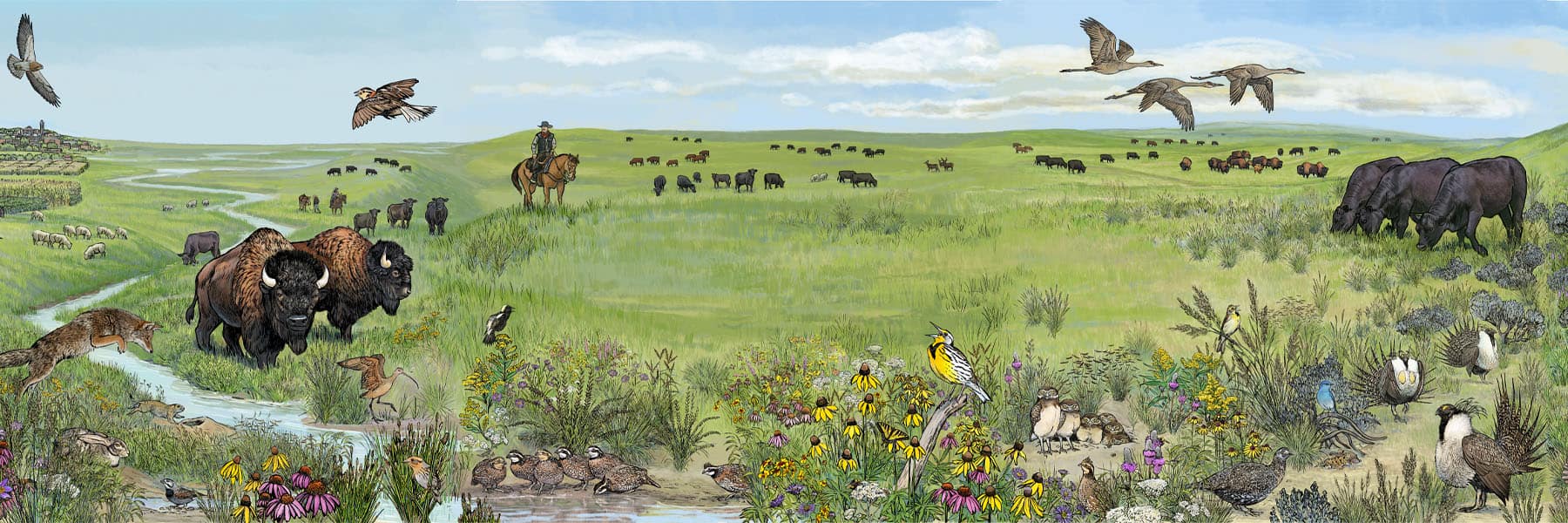
Explore and experience America's grasslands through this digital version of WLFW's America's Grasslands exhibit.

America's Grasslands Exhibit

In 2023, WLFW worked with renowned wildlife artist Ram Papish to produce the America's Grasslands Exhibit. The Exhibit debuted at the 2023 Pheasants Fest and Quail Classic and has made its way to several other events. NRCS staff interested in using the Exhibit at an event can learn more here.
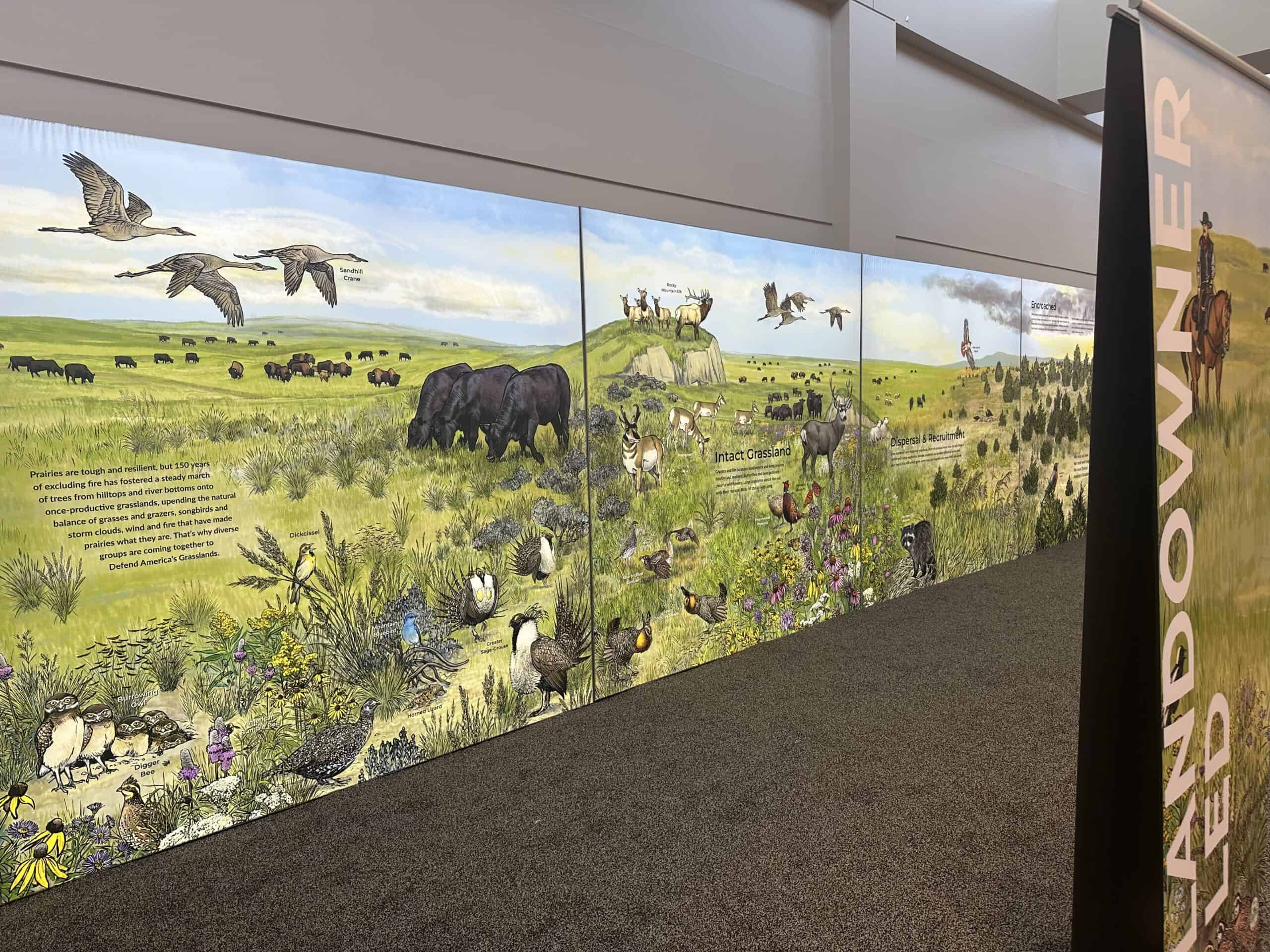
To connect even more people to America's Grasslands, we developed this digital version of the display. Be sure to hover over the icons to learn about our this diverse landscape and the species who rely on healthy, resilient grasslands.

Defending America’s Grasslands

Intact Grassland

Recruitment and Dispersal

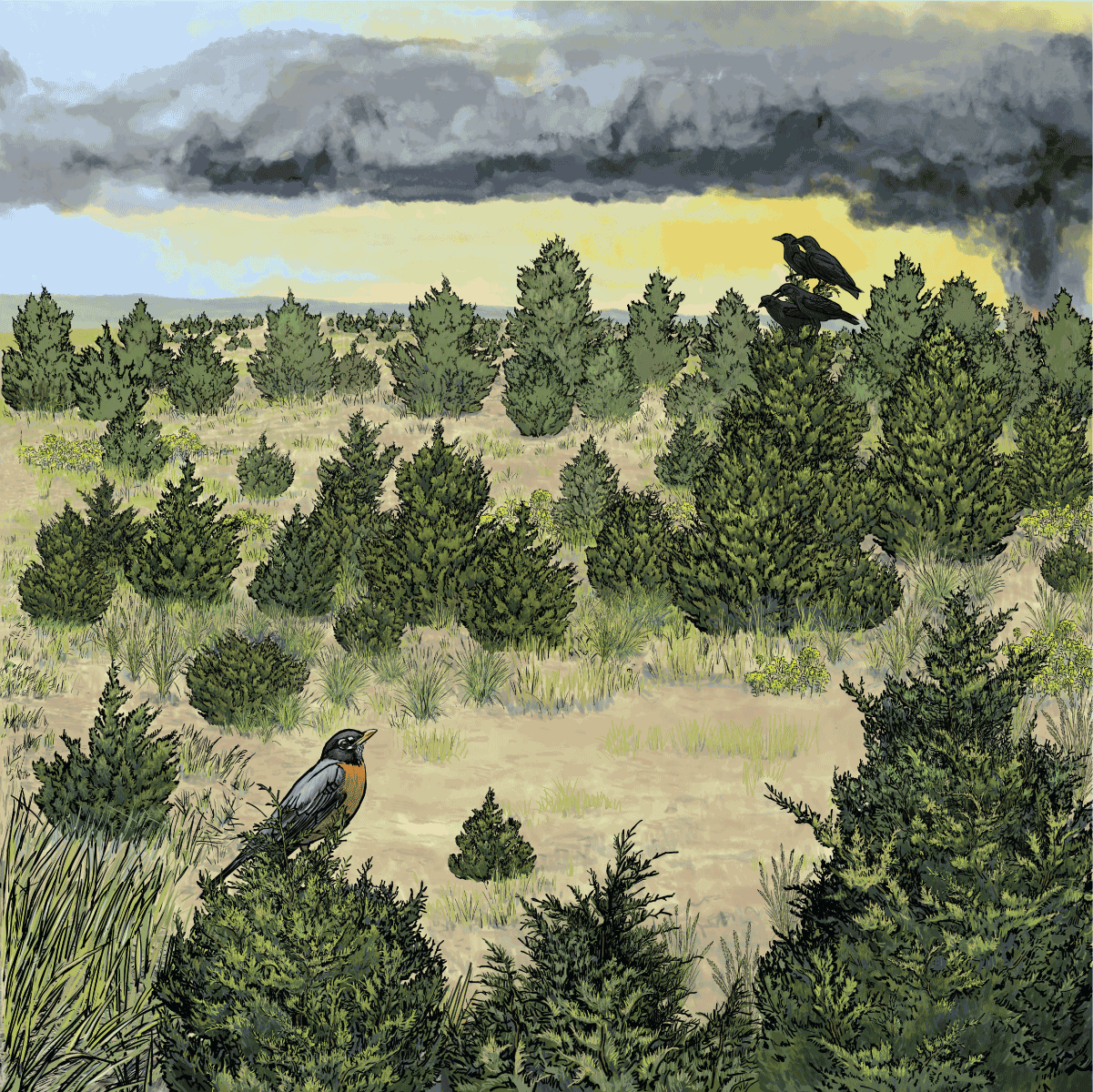
Encroached
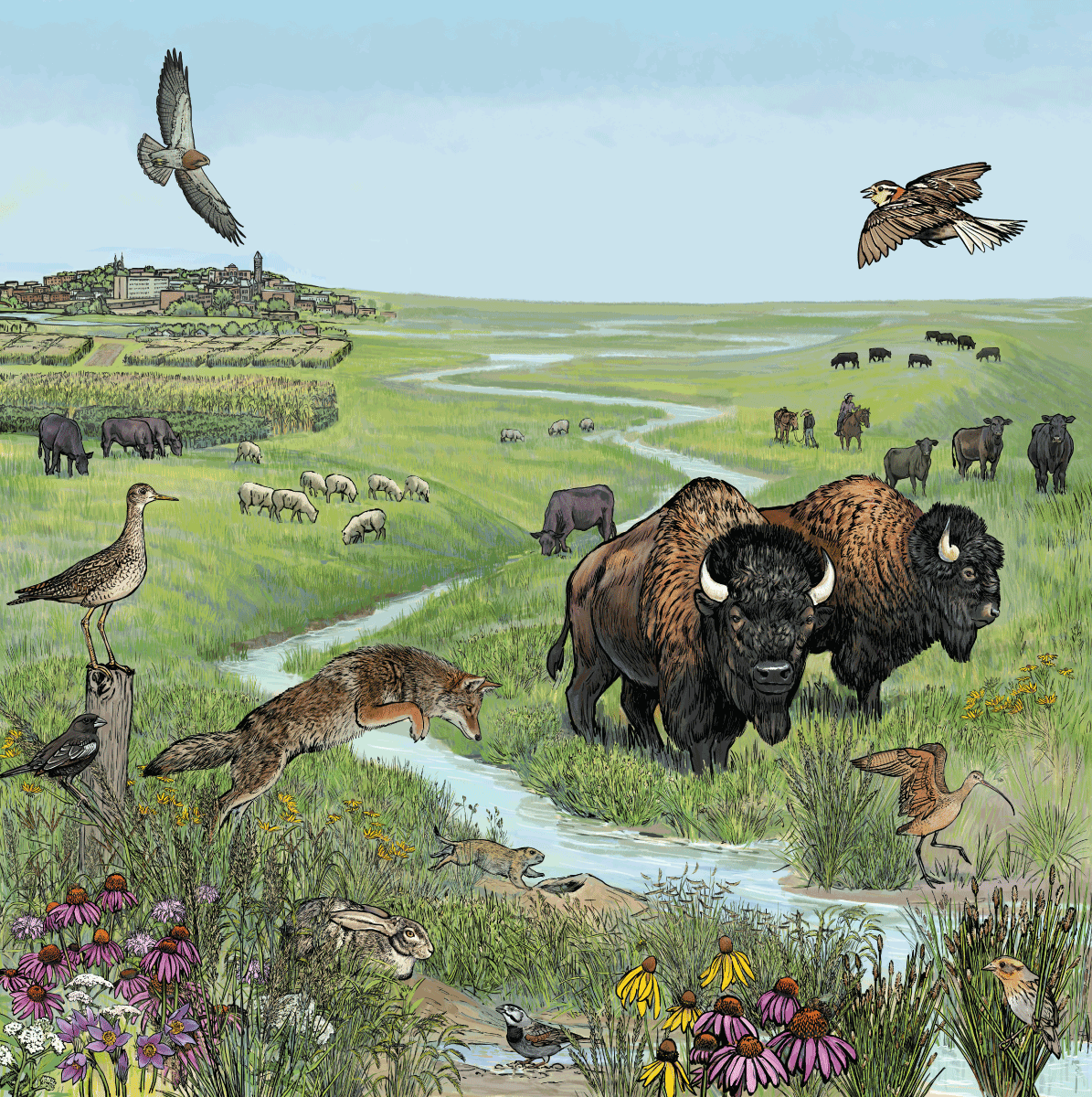
While they may seem a world apart from a quiet prairie, urban centers rely on healthy grasslands just as much as wildlife and livestock. From clean water to school funding, grasslands provide critical resources for communities big and small.
Predators and prey, like this coyote, black-tailed prairie dog, and white-tailed jackrabbit, coexist in a delicate balance across our grasslands.
America’s national mammal, the American Bison helped shape the prairies we know today. While the once-vast herds have long disappeared, bison remain an iconic grassland species celebrated for their resilience and stoicism.
Across America’s grass and shrublands, water is life. Healthy grasslands recharge aquifers and provide clean water for wildlife, agriculture, industry, and recreation.
Swainson’s Hawk
Chestnut-collared Longspur
Upland Sandpiper
American Bison
Lark Bunting
Coyote
Black-tailed Prairie Dog
Long-billed Curlew
Honeybee
White-tailed Jackrabbit
Thick-billed Longspur
Nelson’s Sparrow
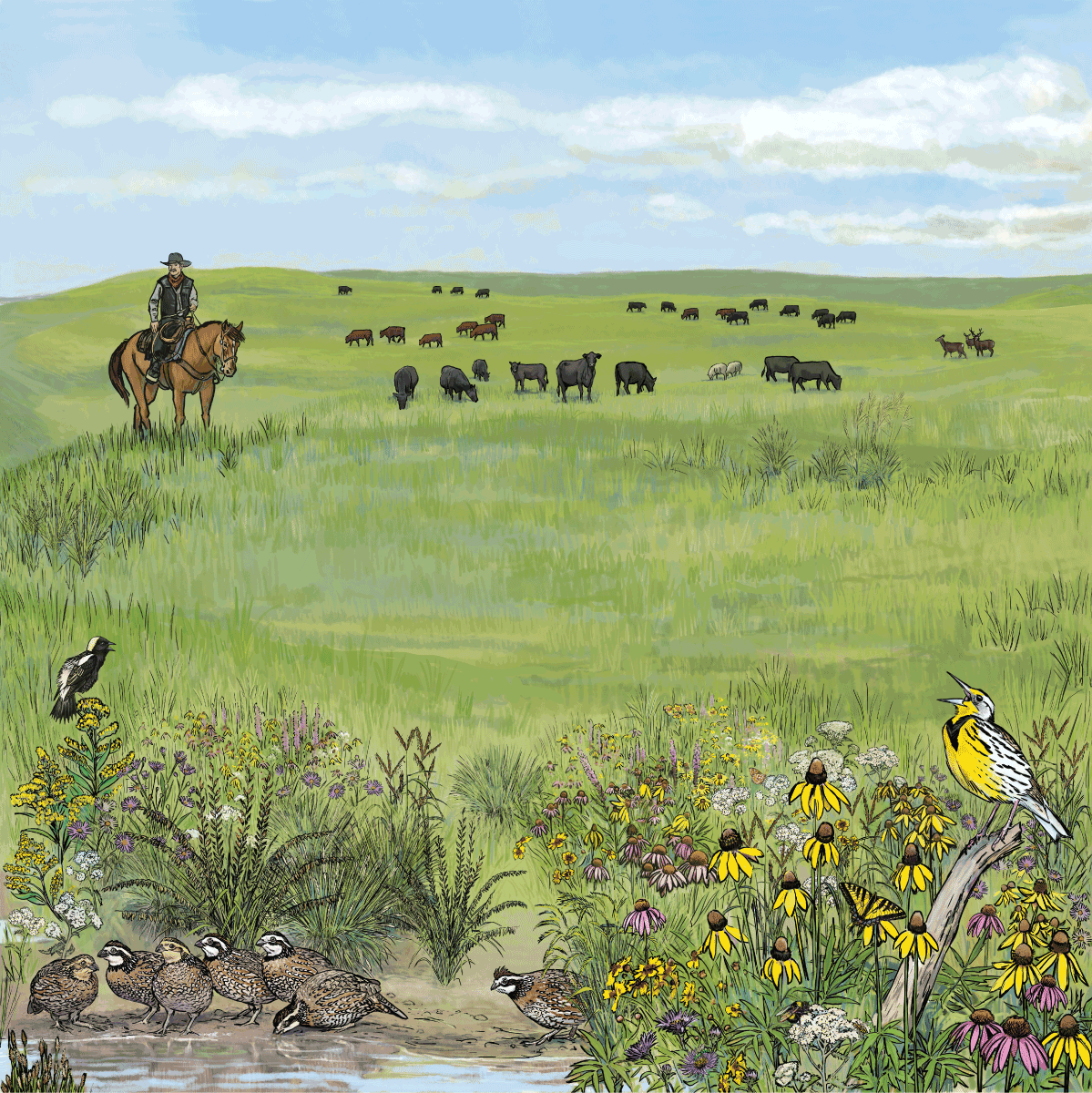
Ranching is a thread that connects America’s grasslands. Well-managed grasslands provide food for livestock and abundant habitat for wildlife.
America’s grasslands are under threat from encroaching trees and conversion of native prairie to crops and houses.
Grassland birds are among the most imperiled of all terrestrial birds. Keeping prairies intact and free from encroaching trees is critical to helping grassland birds, like bobolinks, western meadowlarks, and grouse, thrive.
Bobolink
Northern Bobwhite Quail
Sweat Bee
Eastern Tiger Swallowtail
Hover Fly
Western Meadowlark
Human and Horse
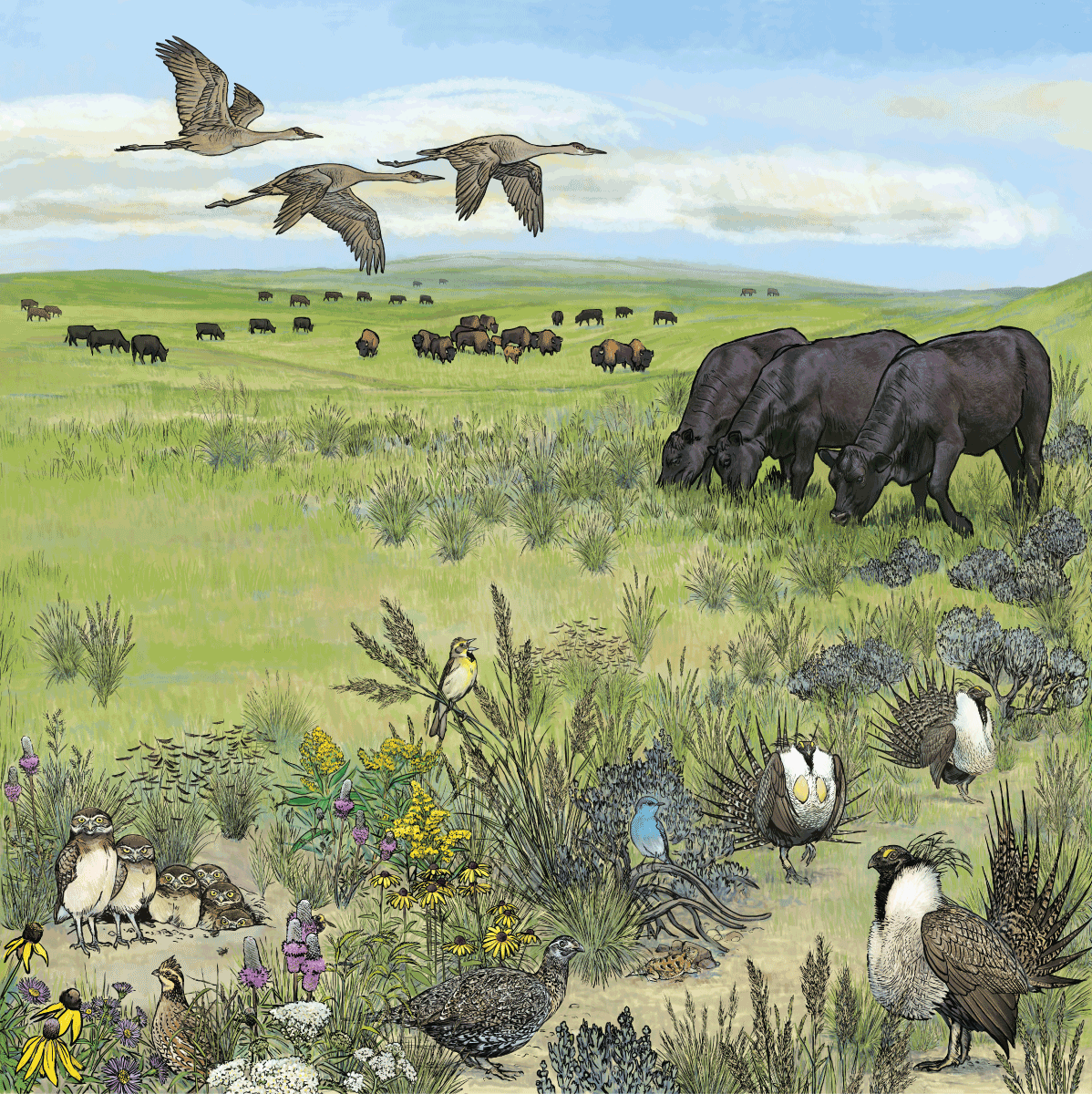
Wildlife have evolved with grasslands. Species like burrowing owls nest underground while species like greater sage-grouse abandon grassland habitat when trees move in.
Pollinators, like digger bees, American bumblebees, and monarch butterflies (next panel), play a critical role in grasslands. Without pollinators, we wouldn’t have prairie flowers, fruiting trees, or crops like cotton.
Sandhill cranes depend on grasslands as they make their annual migrations. Eighty percent of North America’s sandhill cranes migrate along Nebraska’s Platte River each year.
Sandhill Crane
Dickcissel
Burrowing Owl
Digger Bee
American Bumblebee
Greater Sage-Grouse
Mountain Bluebird
Horned Lizard
Rocky Mountain Elk
Pronghorn
Sharp-tailed Grouse
Greater Prairie-Chicken
Ring-necked Pheasant
Monarch Butterfly
Mule Deer
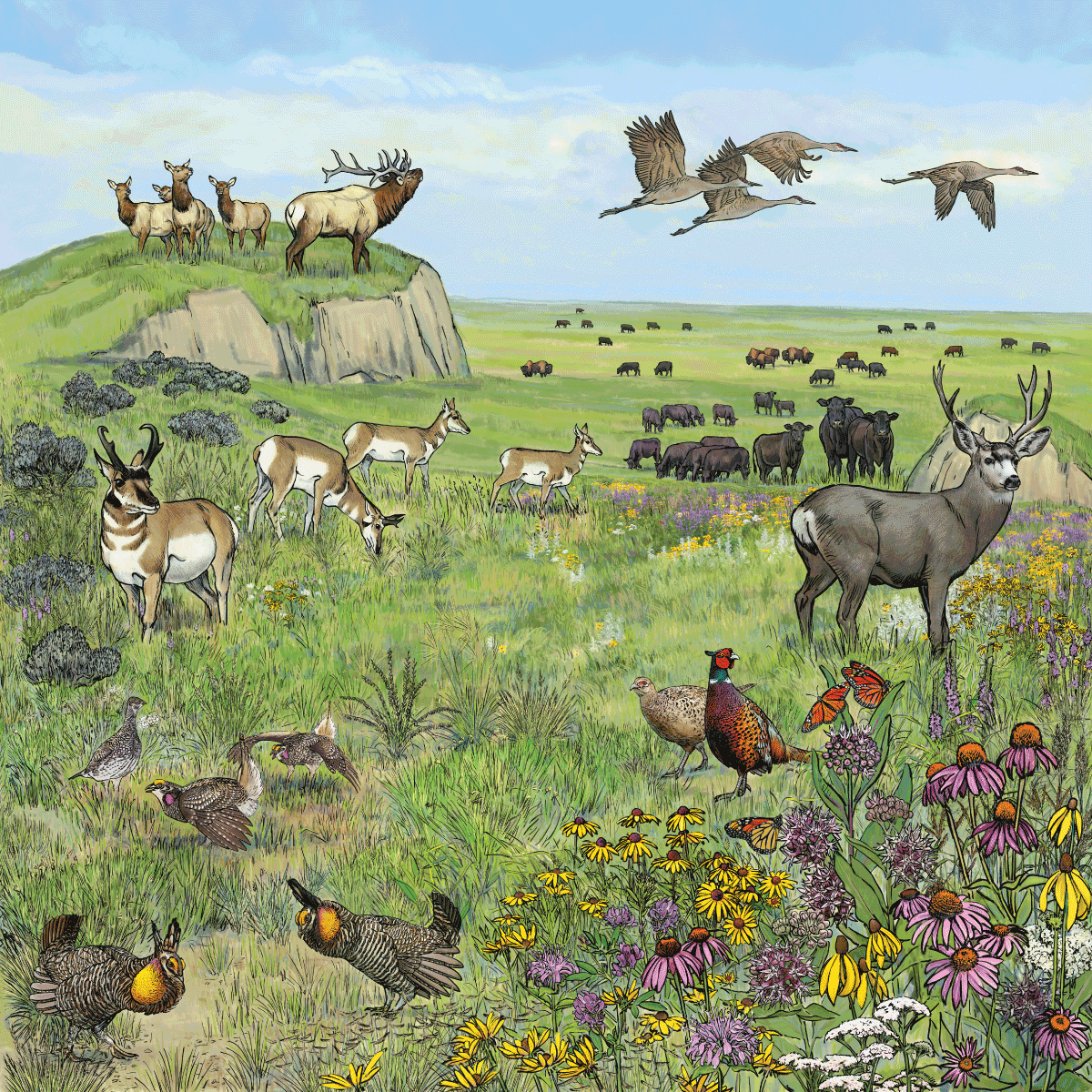
Species like elk, pronghorn, and deer play a key role in grassland ecosystems by helping maintain diverse plant species and recycling nutrients. They also delight wildlife watchers and hunters.
Ground-dwelling birds, like greater sage-grouse (previous panel), prairie-chickens and sharp-tailed grouse, help us gauge the health of grasslands. If the birds are abundant, the grasslands are healthy.
Diverse plants, like grasses, wildflowers, and sagebrush, are the foundation of the prairie ecosystem. They feed wildlife, insects, and livestock, lock soil in place, and store carbon deep underground in their roots.
Red-tailed Hawk
Northern Racoon
Turkey Vulture
Sheep
Cattle
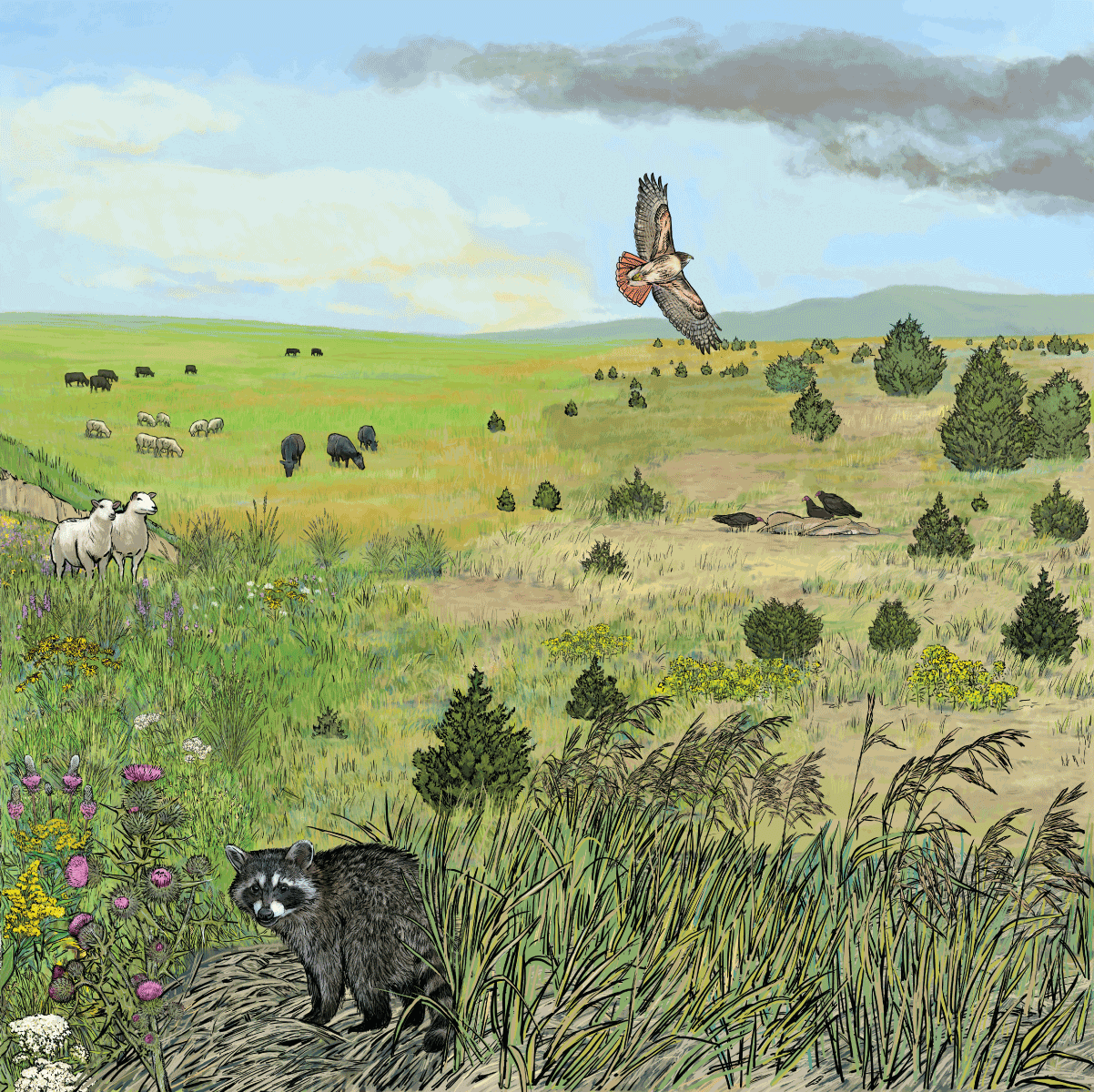
When trees start to move into grasslands, grassland wildlife and native species start to disappear. Invasive plants, like Canada thistle, take root and outcompete native plants.
Predators and scavengers, like racoons, hawks, and turkey vultures, further impact prairie wildlife and reduce diversity.
While this prairie may look relatively intact, even scattered trees forecast its pending collapse. Each tree can produce millions of seeds a year, which take root, deplete water resources, and produce more trees until the prairie is no longer a prairie.
American Robin
American Crow
Eventually, as trees come to dominate grasslands, grassland wildlife disappear, replaced by a handful of generalist species. Wildfires become more severe, threatening homes and communities. Ranchers can no longer graze livestock because native grasses and other plants have disappeared. The prairie is gone.
This collapse is not inevitable. Partners are coming together to Defend America’s Grasslands and ensure they continue to provide and inspire for generations to come.