Colorado Photographer Wins Bird Photographer of the Year
Photographer, Tom DeLiberto was awarded gold in the portrait category with a stunning shot of a sage grouse.

Science to Solutions Seminar: Great Plains Grassland Conservation & Management
October 19, 2026
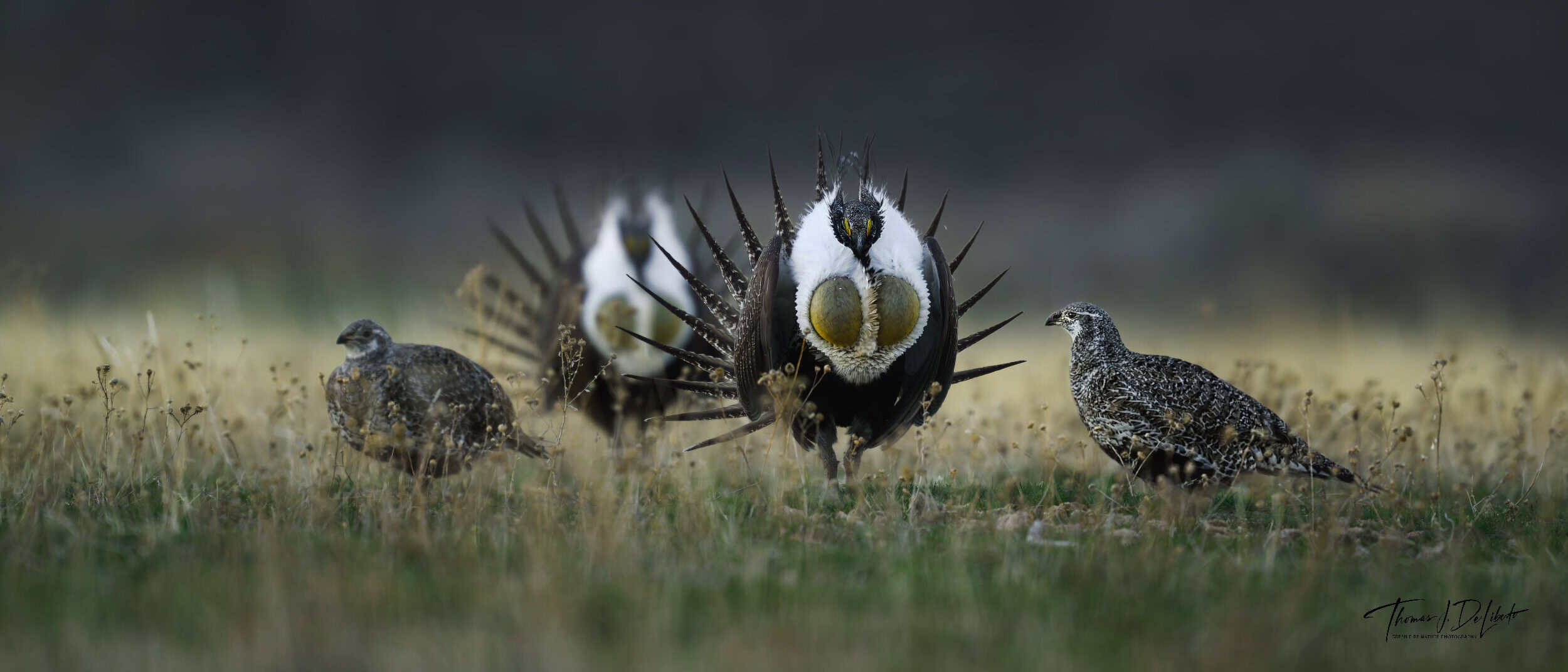
The photograph “Radiant!”, which features a male sage grouse in its glorious courtship display, was awarded first place in the portrait category of the Bird Photographer of the Year competition. More than 24,000 images from around the world were entered in the 2026 competition. We chatted with the photographer (and former USDA wildlife veterinarian and biologist), Dr. Thomas DeLiberto, about how he captured this award-winning image, his love of sagebrush landscapes, and conservation efforts that inspire him.
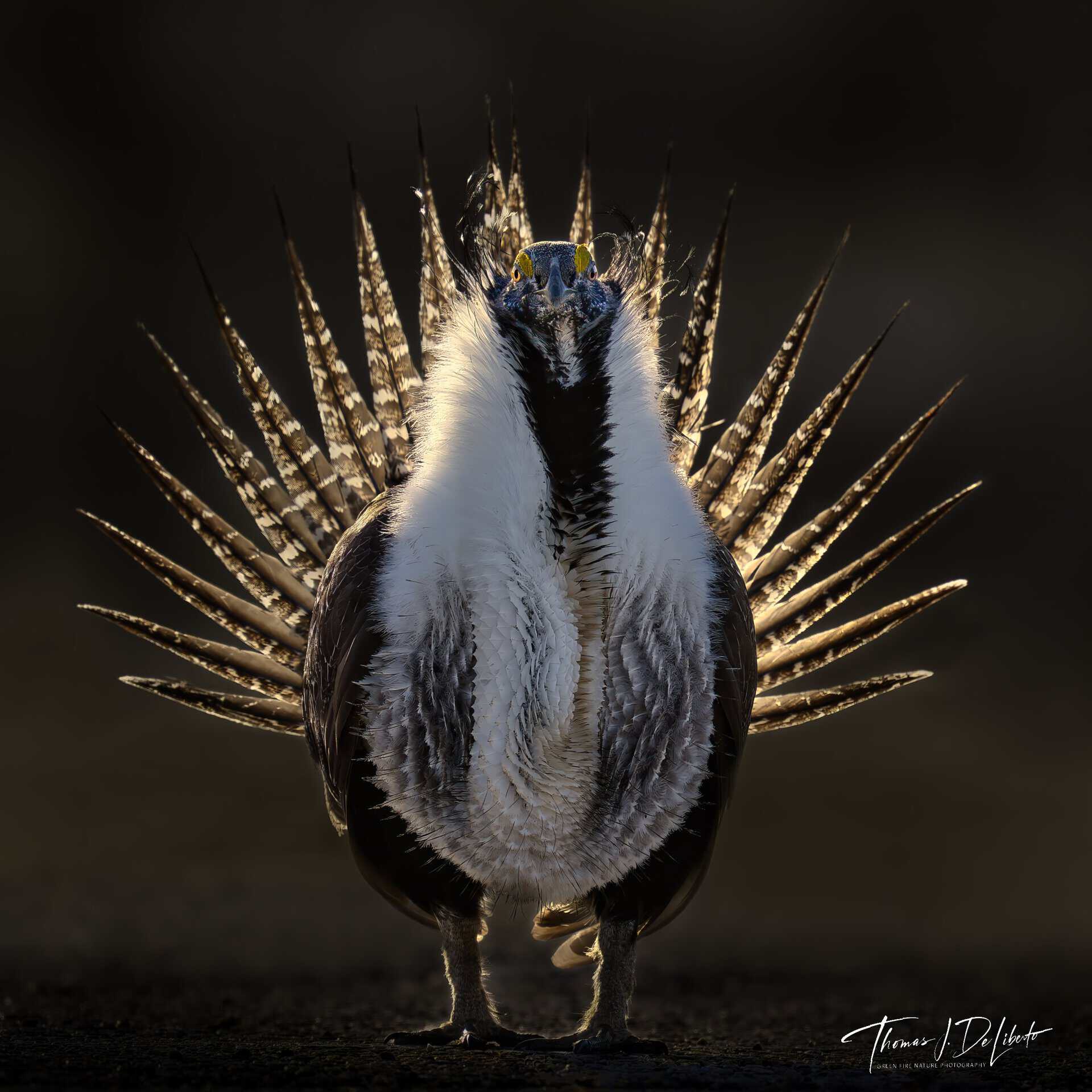
Radiant! This beautiful backlit sage grouse is performing his spring mating dance.
What prompted your interest in wildlife photography?
During my 40-year career as a wildlife veterinarian and biologist for the USDA, I always had a camera on hand. When retirement came, I figured it was time to take up wildlife photography full time. I earned my PhD in rangeland ecology from Utah State University, and I’ve always had a soft spot for shrubland and plains wildlife, especially the sage grouse.
Have you photographed sage grouse before?
This was not my first experience with a sage grouse! In my younger days I was a bird hunter, and developed a lifelong interest in these phenomenal birds. Soon enough, I just wanted to capture sage grouse from behind a camera.
Since my retirement, I’ve visited leks on an annual basis to photograph sage grouse. It’s such a unique opportunity to hear and see how these birds interact on the leks and the light in the morning is just spectacular.
Can you give us the backstory on this shot?
During the wee hours of an early morning in March in Northern Utah, I traveled out to a lek that spans public and private lands. I had my Nikon Z9, equipped with a f2.8, TC VR 400 mm lens in hand.
This particular early morning, I was deep into a ditch with my focus on the lek to the west of me. Several male sage grouse were booming. Then I heard wings start to flap behind me, and turned my attention east—a male sage grouse had just landed, and was getting ready to put on a show.
Since a hill was covering most of the rising sun, I knew I had the chance to capture a beautifully backlit photo of the grouse as it danced. Just as the sun was appearing over the ridge, this grouse turned his head towards me and started to strut. I had only a few moments to capture this backlit portrait of the sage grouse booming with its tail feathers all out.
It was a unique shot because the sun was just peaking over the ridge enough to backlight the grouse’s tail feathers. Plus, the grouse was parallel to me and then turned its head, which created an even more rare scene that I was able to capture.
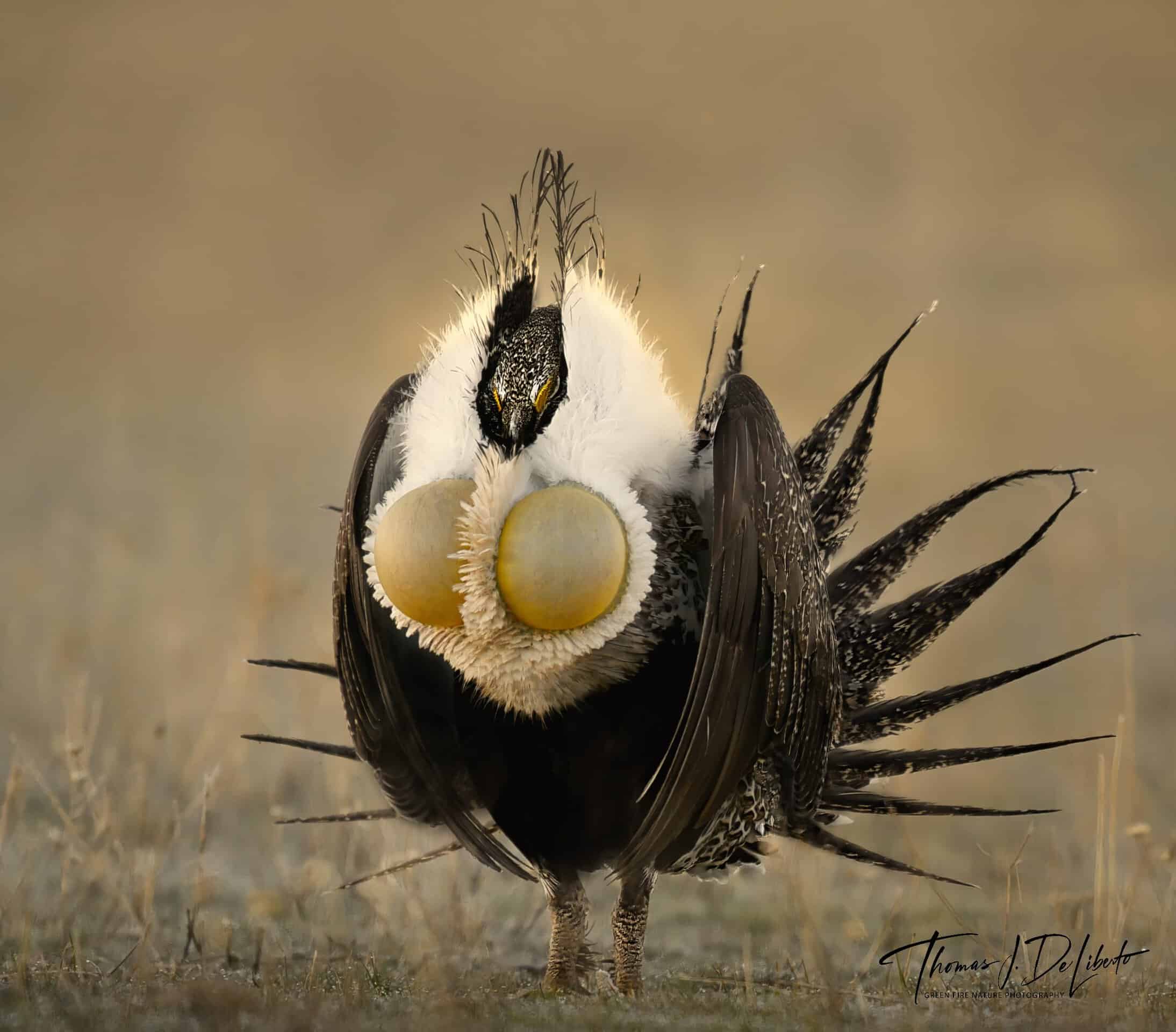
Tom has spent many early mornings out on leks capturing sage grouse.
What advice would you give aspiring wildlife photographers?
Patience, patience, patience. That’s the key for aspiring nature photographers. I’d been out to this location many times before, and walked away with pictures that were good but not contest-winning.
It’s also important to know and understand the technical sides of photography, as well as learning about the environment and wildlife you are trying to capture. That’s how you can create an image that is technically correct, and can also convey emotion.
What do you think is the most pressing threat facing sage grouse?
The biggest pressing threat for sage grouse is the loss of habitat. The loss of habitat can be a result of invasive species, human development, or other causes.
The sage grouse is highly adapted to the sagebrush vegetation and needs vast, undisturbed stands of sagebrush to survive.
Seeing organizations work with private landowners brings me hope for the sage grouse. Much of the intact sagebrush is located on private land. Working with those private landowners to maintain the sagebrush habitat and allowing ranchers to graze their land in a way that doesn’t disturb leks hope for the biome is the key to saving the biome.
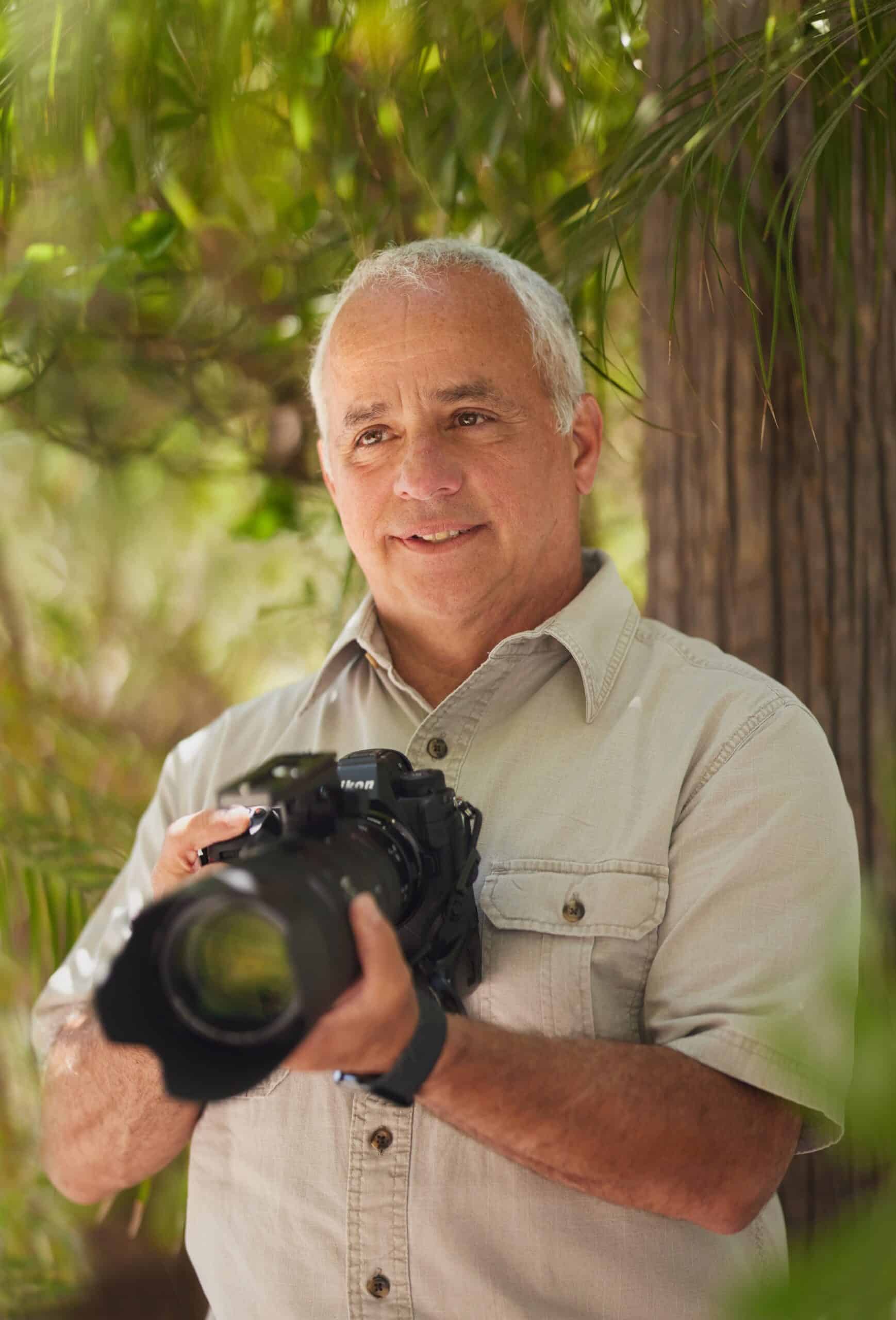
Rapid Fire Questions
What part of nature do you enjoy capturing the most?
Wildlife is where my heart is.
Favorite photography destination?
Rocky Mountains in Colorado: I’ve photographed animals in Central and South America, Mexico, Europe, and Asia, but I love capturing wildlife close to where I live.
Prime or Zoom Lens?
Both! I’m usually carrying two Nikons on my adventures, one with my big prime lens and the other with a 100-400 mm or 70-200 mm zoom.
Tripod or Freehand?
Freehand: Cameras today have great image stabilization. This also allows me to be agile!
Single shot or burst mode?
Burst: It allows me to capture the exact right position of the animal and lighting just perfectly.
Sunrise or sunset shoots?
Sunrise: I like both sunrise and sunset shots, but I find that the mornings are more serene, and put me in the right frame of mind.
Keep up with Tom and his work at greenfirenature.com
Want to learn more about ethical bird photography and videography? Check out this guide put together by Audubon.