In South Dakota, A Young Couple Focuses on Their Ranch’s Primary Asset: Grass
Ben and Lacey Juelfs are revitalizing grasslands in Harding County through custom grazing, innovative partnerships, and careful stewardship.

What’s The Probability Of A Rangeland Fire In The Great Basin In 2026?
March 12, 2026
Invasion Severity Index
April 10, 2026


Where Sagebrush Country Meets the Great Plains
The wide-open prairie of northwestern South Dakota is a special landscape. It’s where the sagebrush and the Great Plains grasslands biomes overlap, creating rich habitat for all sorts of birds and mammals, including pronghorn and foxes, sage grouse and bobolinks.
Large, intact, working ranches in South Dakota—like the operation run by Ben and Lacey Juelfs in Harding County—are integral to the state’s economy. These ranches are also key to keeping wildlife abundant.
Some of the biggest threats facing working ranches in western rangelands are the conversion of grasslands into cropland, invasive annual grasses, and encroaching woody species. Working Lands for Wildlife empowers landowners to keep their range intact and healthy through incentive-based management strategies prioritized in our Frameworks for Conservation Action.
When ranches are embedded in large grasslands that are free of impacts from weeds, trees or plows, it gives producers the flexibility to try a variety of approaches, like the Juelfs’ custom grazing. Keeping grasslands healthy and intact also provides security for future generations of ranchers.
Read on to learn how Ben and Lacey are caring for the grasses and soils that sustain their family.


Grass Is Our Biggest Asset
When Ben Juelfs was a child, he lived on a 3,000-acre ranch homesteaded by his great-grandfather in Harding County, South Dakota. In 2003, when Ben was 10 years old, his father had to sell the cow herd due to drought. The family moved to town and leased out their ranch.
But Ben left his heart on the ranch. He was determined to get back.
As a teenager, Ben worked with ranchers to learn how to hay, manage yearlings, and use horses as a tool for handling livestock. “I was helping neighbors here, there, and everywhere,” says Juelfs, now 34.
Ben met his wife, Lacey, as a teenager at the National High School Finals Rodeo. A third-generation quarter-horse breeder and a barrel racer from South Dakota, Lacey was just as driven as Ben to make a life in ranching.
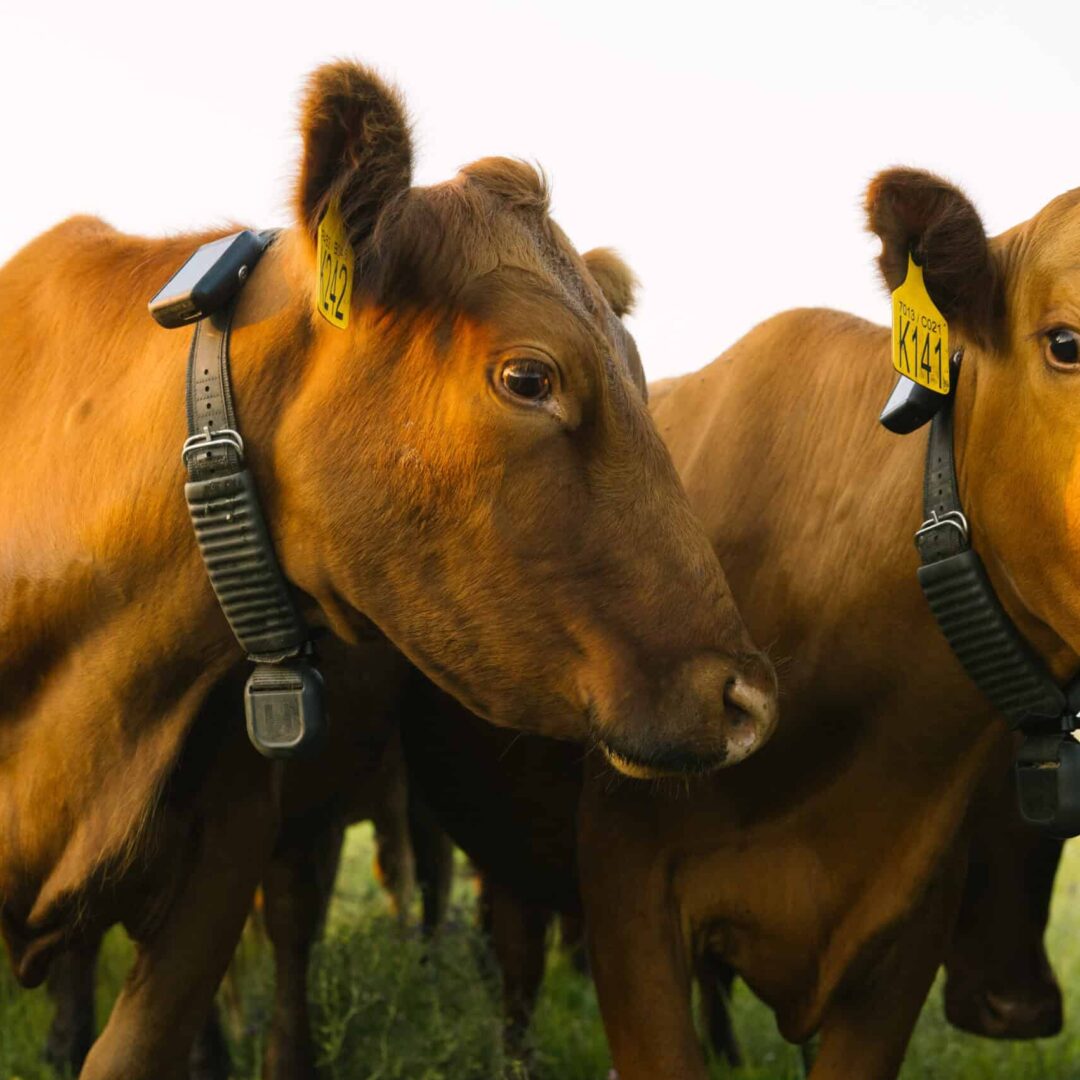
In 2020, Ben and Lacey took over full management of the Juelfs’ ranch with their own young family. The couple centers their operation around custom grazing that offers them financial flexibility and keeps their grasslands productive.
“Grass is our biggest asset. But I think oftentimes as livestock producers, it’s one of the least-managed resources,” Ben says.


Intact Grasslands = Opportunities for Ranchers
The first step for the Juelfs was to figure out how to start a ranch in their mid-20s and not go broke. Rather than taking out loans to invest in their own herd, they launched a business focused on leasing high-quality grass.
There was just one problem: “It wasn’t an operating ranch,” Lacey says. “We were starting at square one.”
The ranch had aging fences, minimal infrastructure, and an outdated water system.
In 2020, Ben visited the USDA Natural Resources Conservation Services (NRCS) office in Buffalo to ask about options for assistance. He was surprised to learn that as a beginning rancher, he qualified for 100 percent cost-share under the NRCS Environmental Quality Incentives Program.
Jaime Fuhrman, a resource conservationist with South Dakota NRCS, helped Ben redesign the ranch’s water system and apply for EQIP.
“One of the biggest challenges was getting the water capacity and distribution Ben needed,” Fuhrman says.
Through EQIP, the Juelfs built new pipelines, added 10 water tanks, and drilled a new well. The project doubled the ranch’s watering capacity, which doubled the number of cattle that could graze in one herd.
The Juelfs also re-designed fences and pastures across the entire ranch, replacing the old barbed-wire with single-wire electric fence on fiberglass posts. This allows them to move cattle easily and often, which lets their grass rest and regenerate.
“We just got tremendously lucky on that deal,” Ben says. “We were able to completely revamp the place.”


Healthy Grasslands Attract Birds, Too
Fuhrman also introduced Ben to other NRCS conservation practices and funding to benefit at-risk grassland birds. The Juelfs were compensated for adopting conservation practices that maintain nesting and brood-rearing cover. Participating landowners are also required to monitor their grasslands.
“Ben was interested in starting monitoring on his operation, so it was a good fit,” Fuhrman says. “These monitoring methods can help producers compare results from year to year so they can adjust their management accordingly.”
A total of 28 bird species were recorded on the Juelfs pastures in 2024 by researchers from the World Wildlife Fund and the Intermountain Bird Observatory. Some of the most abundant species flitting through Ben and Lacey’s grasslands were chestnut-collared longspurs, grasshopper sparrows, and lark buntings—all of which are species of concern according to South Dakota Game, Fish and Parks.
The Juelfs also enrolled in the Northern Great Plains Sustainable Ranching Initiative, which provides them with data on their ranch’s vegetation, soils, and water infiltration.
After six years, Ben and Lacey have seen positive changes on their rangeland. Wet meadows and streams are healing. Deer and sage grouse are strong. And more wildflowers pop up each spring, a great sign of healthy soils.
“It seems like every year we find a new bird or flower we haven’t seen before,” Lacey says. “That’s been really fun to watch.”


Ranching That Fits The Family And The Land
In addition to improving the ranch’s soils and grasses, Lacey says that “custom grazing has been a really great opportunity for us to stay out of debt”. The six-month season also provides plenty of flexibility for the family to focus on other parts of their agricultural operations.
For instance, Lacey is rebuilding the renowned quarter-horse breeding program started by her grandfather, Tom Carroll. This spring she’s opening an equine reproduction facility on the ranch, which will offer artificial insemination and embryo transfer services.
Ben says his next venture may be buying sheep for the ranch.
Meanwhile, the couple is busy raising three boys under 10. They both speak passionately about the importance of keeping family at the center of everything they do.
“Management is all about succession—not just of the grasses, but of family,” Lacey says.
Both Ben and Lacey believe that succession planning is one of agriculture’s most overlooked challenges. Lacey and Ben have had many conversations with Ben’s siblings and parents about the future of the family’s multi-generational ranch in South Dakota. Even though the conversations were often tough or emotional, the payoff is keeping their agricultural heritage alive, the grasslands intact, and the family together and thriving.
“When you operate in a way that fits the land, it creates positive energy in your business and in your family,” Ben says. “This path has brought so much enthusiasm and hope for prosperity.”