Bad Seeds: Invasive Annual Grasses Threaten Rangeland In Montana
A feature published in Montana Outdoors shows how partners are defending native plants in the Treasure State from invading grasses.

Where There’s Water, There’s Life
September 10, 2026
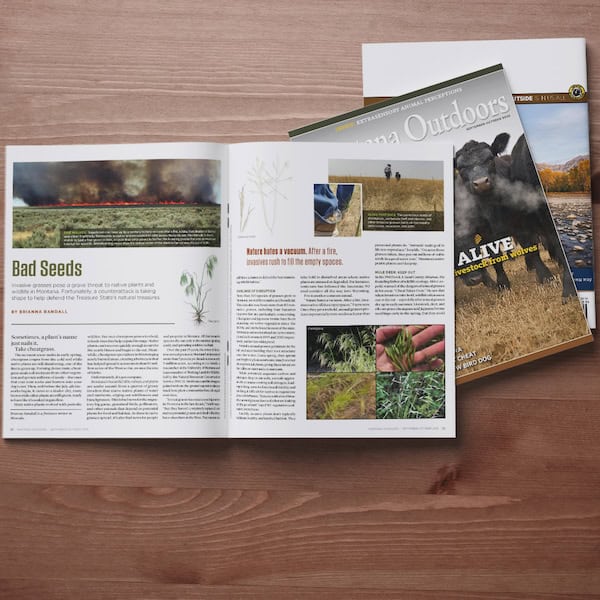
The following excerpt is from a story published in the Sep-Oct 2026 issue of Montana Outdoors, the magazine of Montana Fish Wildlife & Parks.
Sometimes a plant’s name just nails it. Take cheatgrass.
The moment snow melts in early spring, cheatgrass erupts from the cold soil while native plants are still slumbering, one of the first to green up. Forming dense mats, cheatgrass steals soil moisture from other vegetation and sprouts millions of seeds—the ones that coat your socks and burrow into your dog’s coat. Then, well before the July 4th fireworks begin, it cures to a tinder-dry, rusty brown while other plants are still green, ready to burn like it’s soaked in gasoline.
Many native plants evolved with periodic wildfire. But once cheatgrass gains a foothold, it feeds fires that help expand its range. Native plants can’t recover quickly enough to survive the yearly blazes and begin to die out. Meanwhile, cheatgrass specializes in blitzkrieging newly burned areas, creating a burn cycle that has helped spread it across more than 50 million acres of the West so far, an area the size of Idaho.
Unfortunately, it’s got company.
Montana’s beautiful hills, valleys, and plains are under assault from a quartet of grassy invaders:
- Cheatgrass
- Japanese brome
- Ventenata
- Medusahead
These Eurasian imports starve native plants of water and nutrients, edging out wildflowers and bunchgrasses. This is bad news for the migratory big game, grassland birds, pollinators, and other animals that depend on perennial plants for food and habitat.
As these invasive grasses spread, it’s also bad news for people and property in Montana. All four invasive species dry out early in the summer, igniting easily and spreading wildfires in a flash.
Over the past 25 years, the cover of invasive annual grasses in Montana has increased more than 5 percent per decade across nearly 5 million acres, according to Joe Smith, a researcher with Working Lands for Wildlife. Smith uses RAP (satellite imagery paired with on-the-ground vegetation data) to track how plant communities have changed over time.
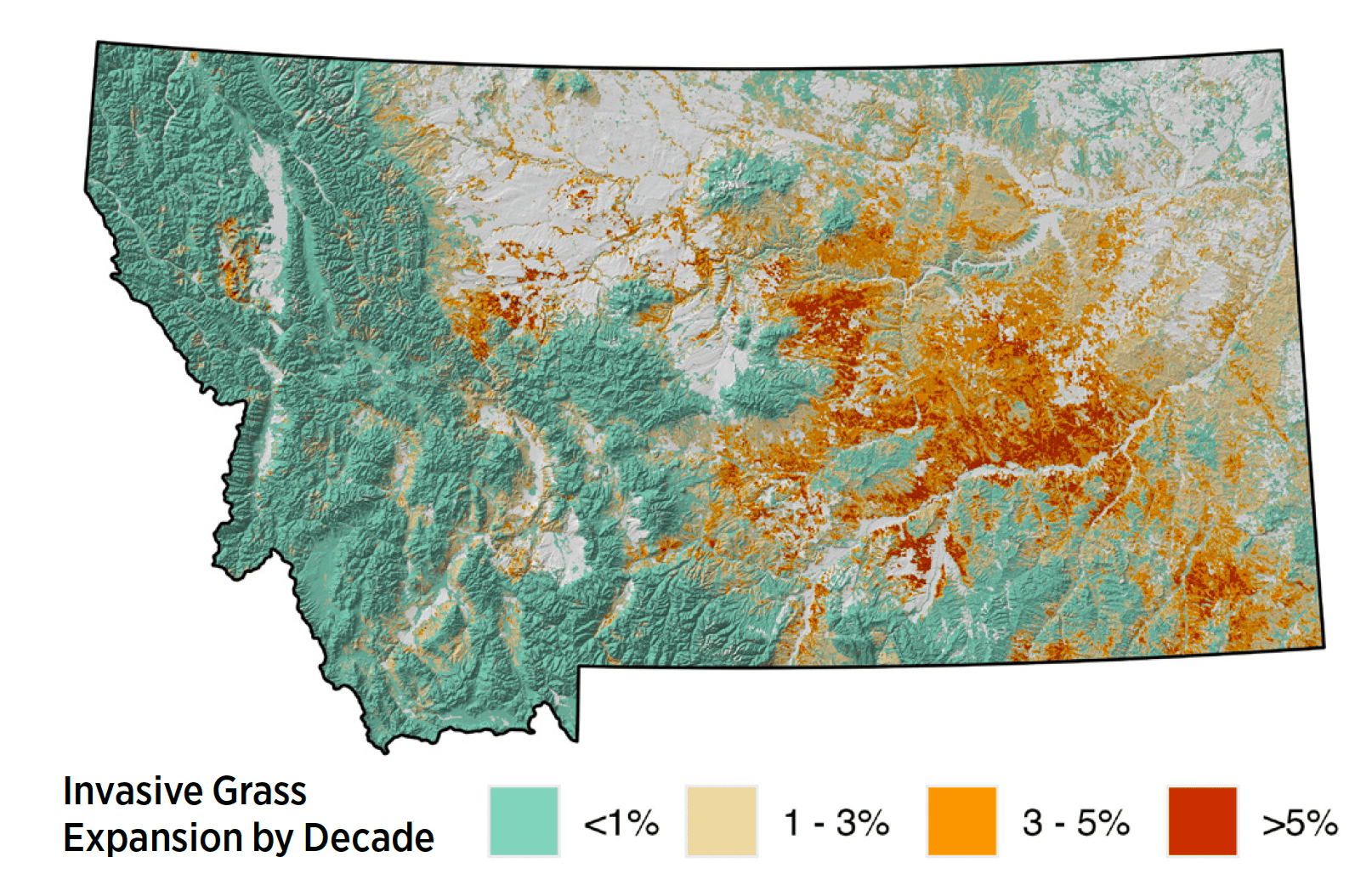
“Annual grasses have made some big moves in Montana in the last decade, but they haven’t completely replaced our native perennial grasses and shrubs like they have elsewhere in the West. That means we still have a chance to defend the best remaining wildlife habitat,” says Joe Smith, WLFW researcher.
As invasives take over, wildlife begins to move out.

Livestock, deer, and elk can graze cheatgrass and Japanese brome seedlings early in the spring, but they avoid eating the stalks once the plants mature and dry out.
Ventenata and medusahead, on the other hand, have almost zero forage value at any time of year because they have higher amounts of silica. “For an ungulate, that’s like sand in your mouth. It’d be like biting wire,” Payne says.
Researchers tracked more than 100 mule deer wearing GPS collars in northeastern Wyoming. Once invasive annual grasses covered more than 13 percent of the sagebrush landscape, mule deer began to steer clear of the area. When invasive grass cover reached more than 20 percent, mule deer strongly avoided infested lands.
As invasive grasses reduce the nutritional diversity offered by native plants, it puts a strain on lactating does as well as male bucks’ potential to grow larger antlers, Payne says. It also shifts grazing pressure to where native plants are healthy.
Montana NRCS has helped landowners tackle invasive annual grasses on nearly 100,000 acres with $7.3 million in financial assistance.
“Getting rid of invasives and proactively defending intact grasslands from invasion maintains healthy rangelands, supports producers, and strengthens their long-term productivity and profitability,” says Gayle Barry, NRCS State Conservationist for Montana.
The good news is that Montana has plenty of healthy habitat left. In regions with cooler winters and more moisture, perennials are still thriving and able to resist invasion, such as along the Hi-Line and in north-central Montana.
Landowners and managers are deploying a suite of tools to fight back against these invaders. Herbicides such as Rejuvra are showing particular promise. Near Fort Keogh and Miles City, habitat managers are combating cheatgrass and Japanese brome by timing prescribed fires around summer rains that allow native prairie plants to flourish post-burn.
In southwestern Montana, ranchers are also using fire to manage unwanted annual grasses, alongside targeted herbicide applications, native plant seeding, and livestock grazing in the spring.