What Are Mesic Resources?
Ranchers and wildlife depend on wet, green places such as streamsides, meadows and springs, which represent just 2% of the West’s landscapes

Beavers Take Center Stage In Movies And On Western Ranches
April 17, 2026
Data-Driven Wildfire Recovery in the Great Plains
April 29, 2026
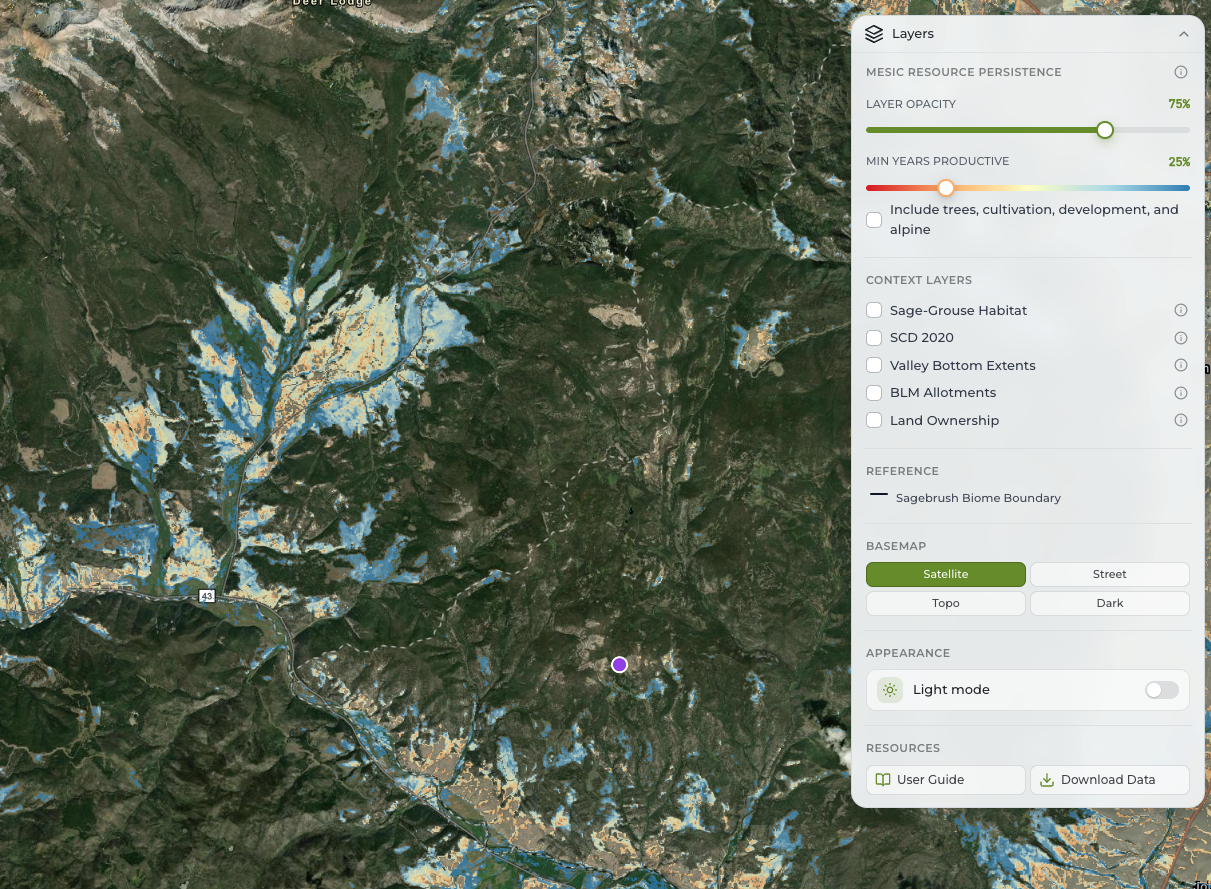
Are you a land manager or conservation practitioner in the sagebrush biome? The Mesic Analysis Platform can help you restore water where it’s needed most. This free online mapping tool helps identify, prioritize, and monitor mesic resources in the western U.S.

How Do We Define Mesic Resources?
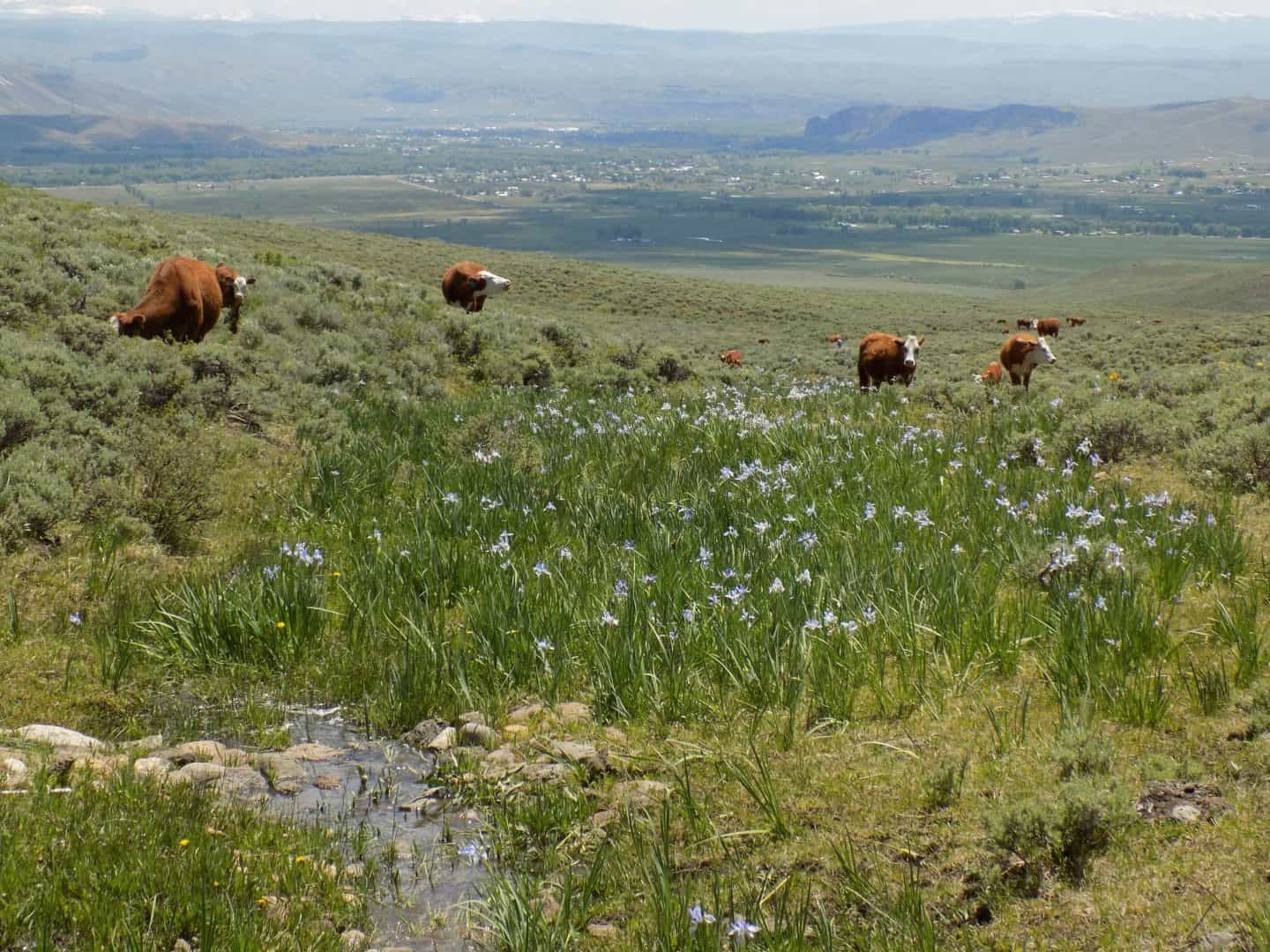
Mesic areas are the wet, green places where water meets land. This includes riparian areas along streams and rivers, wet meadows, springs and seeps, irrigated fields and high-elevation habitats. In these mesic areas, the soils have a well-balanced supply of moisture throughout the growing season, allowing plants to grow longer into the dry months.
Where Are Wet, Green Places In The West?
In the arid American West, wet places cover less than 2% of the entire landscape. Since early settlers homesteaded along rivers and streams, the vast majority of precious mesic resources are located on private lands. In the dry Great Basin, for instance, 87% of wet meadows are on private land.
How Do Mesic Resources Stay Wet?
Most of the precipitation in the western United States falls as snow. When the snow melts and runs down the mountains each spring, the water recharges streams, rivers, lakes and groundwater.
Healthy mesic areas, like meadows and riparian corridors, act like sponges. They capture, store, and slowly release water year-round. In the late summer and fall, when the snow is gone and the rains stop, much of the water on the landscape evaporates. Places where mesic resources keep the soil wet remain the only green “islands” left in the sagebrush desert.

What Grows In Mesic Areas?
Natural mesic areas like riparian corridors, springs, and wet meadows are defined by water-loving vegetation. Examples of plants that prefer growing in wetter soils are sedges, rushes, willows, or cottonwoods. Some mesic areas have moving water (called lotic systems) while others have standing or underground water (called lentic systems).
Mesic habitats can also include high-elevation uplands along mountain tops that simply stay wetter and greener longer into the summer. Agricultural fields in sagebrush country may also be mesic areas when irrigation maintains wet soils to grow alfalfa and grass hay.
What Benefits Do Mesic Resources Provide?
On the range, water is life. Mesic habitats provide essential services for the people and animals. These wet places offer food, water, and cooler shelter when summer heat dries surrounding lands. They also help resist wildfires and droughts, acting as a much-needed refuge when water is scarce.
Do Wildlife Need Mesic Areas?
Yes! More than 80% of wildlife in sagebrush country rely on mesic resources. These wet, green habitats serve as grocery stores for many birds and mammals. In ribbons of green vegetation, animals feast on protein-rich wildflowers and shrubs as well as a variety of insects.
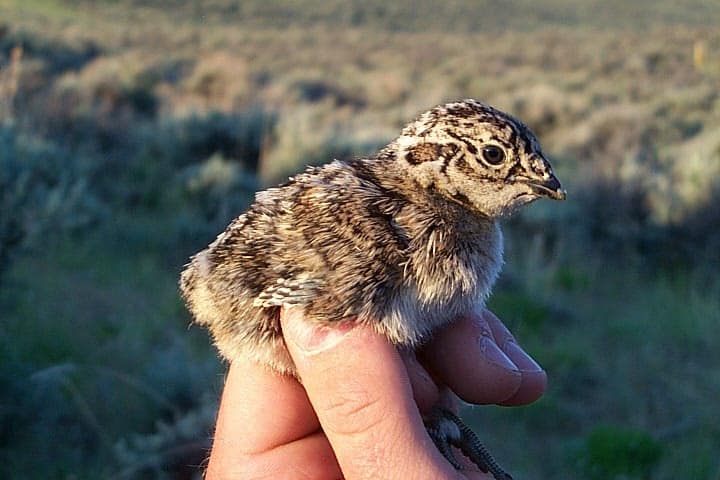
Sage grouse hens and their growing chicks flock to wet, green places during the late summer in search of food. Chicks that eat forbs and insects longer into the fall have a higher survival rate than chicks that transition earlier to their winter diet of sagebrush leaves.

How Can We Conserve Mesic Resources?
A variety of practices keep water on the land longer and vegetation green during the West’s dry season. Examples include grazing management, conservation easements, low-tech restoration, and removal of encroaching conifers. These practices also buffer the impacts of drought for ranchers, boost forage production for livestock, and improve habitat for wildlife.
The NRCS and Working Lands for Wildlife offer technical know-how and financial cost-share for landowners interested in protecting or improving precious water resources. Learn more >
Mesic Analysis Platform
An interactive new platform helps people identify, monitor, and prioritize mesic resources across the sagebrush biome. This mapping app combine 40 years of Landsat imagery to give landowners and mangers tools for focusing restoration efforts where they will have the greatest impact.