Western Working Lands Snapshot | Kīpuka in the Sagebrush Biome
Surrounded by lava rocks that protect them from fire, grazing, and other disturbances, kīpuka are islands of intact vegetation that give a glimpse into how the sagebrush biome looked centuries ago.

Invasive Annual Grasses Threaten Mule Deer Habitat
September 2, 2025
America’s Last Great Grasslands
September 29, 2025
What are kīpuka?
A kīpuka is an island of intact vegetation surrounded by lava rock. These islands are created when hot, flowing lava separates around a ridge or a hill and then flows back together again. As the lava cools and solidifies, the untouched land in the middle becomes an oasis of still-living vegetation. (Fun fact: the word kīpuka is both singular and plural.)
Kīpuka (pronounced “kee-poo-kah”) can be small patches the size of a living room or several square miles in size. This geologic term comes from a Hawaiian word that means opening. Kīpuka are common in the volcanically formed Hawaiian islands.
Why are kīpuka important?
They are islands of intact native vegetation. The plants, animals, and living soils within kīpuka help re-seed and re-colonize the barren volcanic landscape around them. On islands like Hawaii, isolated kīpuka can also incubate new species. The harsh, jagged lava rock forms a natural barrier that protects the native plants and animals inside kīpuka. That means these island ecosystems are largely unaffected by disturbances such as wildfire, agricultural grazing, or human development.
Are kīpuka found in the Continental U.S.?
Yes! Most kīpuka outside of Hawaii in the U.S. are found in Craters of the Moon National Monument. This area of south-central Idaho is within the sagebrush biome. Around 500 kīpuka are found in the monument, most of them containing healthy, diverse sagebrush-steppe plants.
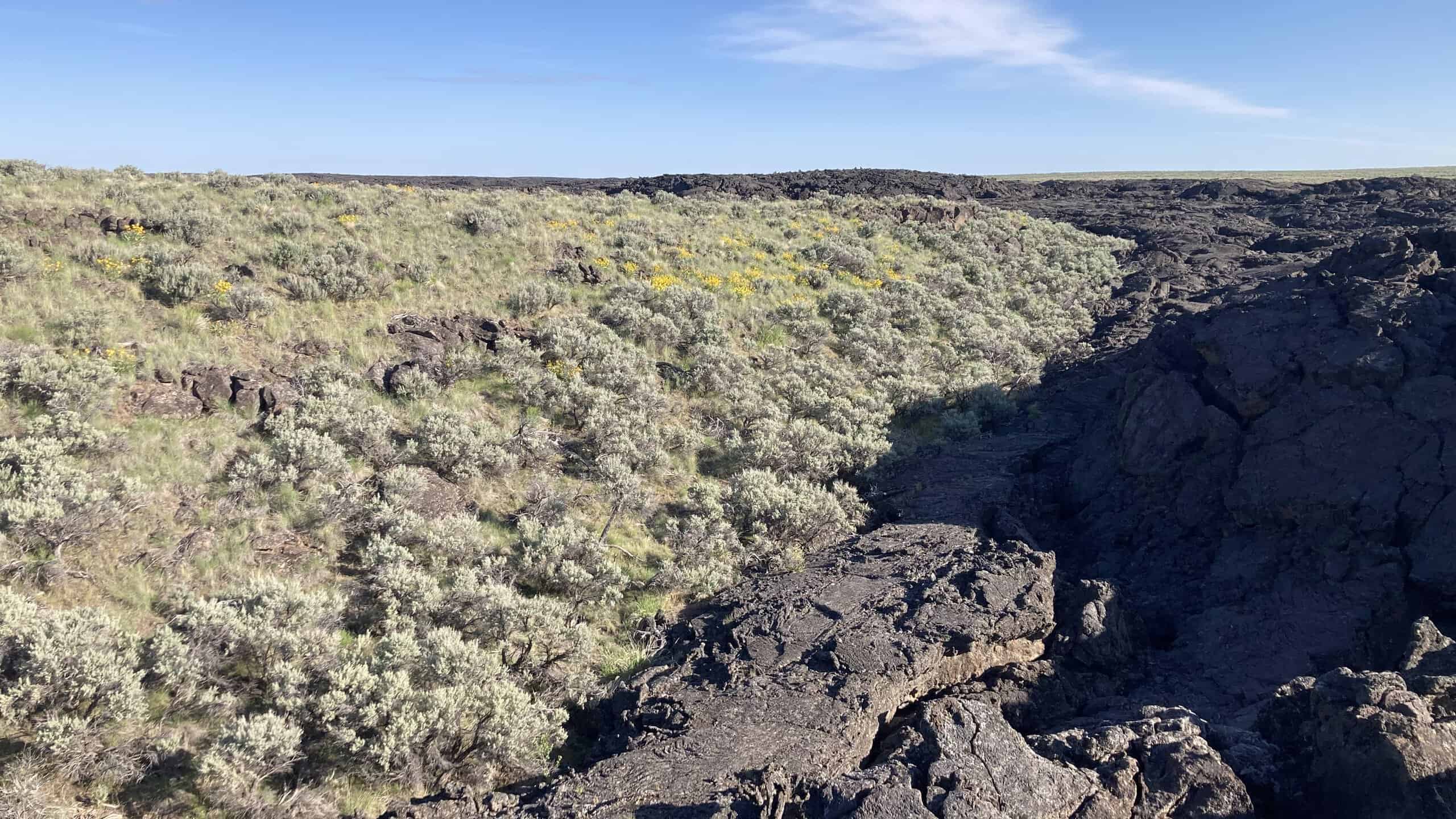
What is the role of kīpuka in the sagebrush biome?
Kīpuka in Idaho are resplendent with mature sagebrush, perennial grasses, and colorful wildflowers.
The kīpuka have also protected sagebrush-steppe flora from disturbances that have degraded many other parts of the biome over the past two centuries. They show us what sagebrush plant communities look like without being disturbed by fire, livestock grazing, or human development.
“Kīpuka are rare gems of undisturbed landscape. They give us a glimpse into the past to show what the biome looked like centuries ago.” ~ Joe Smith, ecologist, University of Montana’s WLFW research team
Why are scientists studying kīpuka in Idaho?
Kīpuka in the western U.S. can serve as a baseline reference for how undisturbed sagebrush ecosystems look and function. They are also a valuable reservoir of seeds that can aid in conservation and restoration efforts biome-wide.
In Craters of the Moon National Monument, scientists survey the types of plants in kīpuka. They also monitor the health of the plants and animals that live in these islands to see how they are faring.
Recently, Working Lands for Wildlife investigated whether kīpuka have been resistant to weeds like cheatgrass and medusahead.
WLFW researchers at the University of Montana looked at satellite imagery from the Rangelands Analysis Platform to see how vegetation in kīpuka has changed since 1985. They also analyzed on-the-ground plant survey data from the Bureau of Land Management’s Assessment, Inventory and Monitoring Strategy.

What do the results show?
Sadly, even isolated kīpuka are being invaded by weeds. Smith found that invasive annual grasses are increasing over time in Idaho’s kīpuka while native perennial bunchgrasses, wildflowers, and shrubs are declining.
The primary culprits for spreading invasive weeds are wildfire, grazing, and roads. But kīpuka are surrounded by bare rock, so it’s very rare that the vegetation inside them burns. Plus, these small pockets of sagebrush aren’t grazed by cattle and don’t have roads through them.
This tells us that the seeds of invasive annual grasses are spreading into healthy, native sagebrush ecosystems via wind.
Stay tuned for more details on how invasive annual grasses are impacting kīpuka.
How can we protect kīpuka?
Conserving patches of intact, core sagebrush like kīpuka is vital for maintaining biodiversity and resilience in the sagebrush biome.
To defend kīpuka from invasive annual grasses, we must strategically manage weeds on the periphery of these sagebrush islands. This can be done by carefully applying herbicides and by monitoring—and treating—weeds before they spread into kīpuka and other core sagebrush areas.