Photo: Tom Koerner, USFWS
Migratory Big Game Conservation
Mule deer, elk, pronghorn, moose, and bighorn sheep all require room to roam. Protecting migratory pathways helps them all and benefits other species too.
The breathtaking Greater Yellowstone Ecosystem in Wyoming, Montana and Idaho depend on keeping working lands intact and profitable. This is because animals rely on private lands during their annual migrations.
Tracking studies show that elk, mule deer, pronghorn antelope, bighorn sheep and moose weave between public and private land depending on their seasonal habitat needs. Elk, for instance, forage in ranchers’ pastures during the winter, and females often calve in agricultural fields in the spring before moving to neighboring national parks or forests.


FAST FACTS
Migratory Big Game
The Distance
Big game species travel 30 to 200 miles twice each year on well-trodden migration routes.
The Landscape
Private lands comprise 30 percent, or six million acres, of the Greater Yellowstone Ecosystem in Wyoming, Montana and Idaho.
The Food Web
Migratory big game animals underpin a vast food web, supplying food for bears, wolves, ravens, foxes and eagles.
The Hazards
Fences or roads present obstacles for migrating animals, injuring or killing hundreds of big game species each year.
The Opportunity
WLFW and partners help landowners make fences wildlife-friendly and compensates them for providing migratory habitat.
-
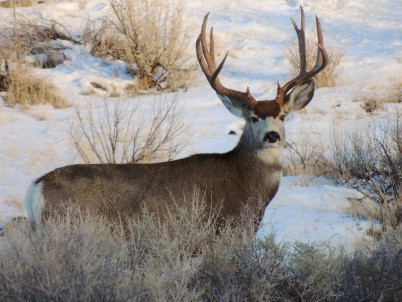
- Mule deer migrate from summer to winter grounds in search of food and warmer weather. Photo: Ken Miracle
-

- The fastest land animal in North America, pronghorn need room to run. Photo: Ken Miracle
In 2026, USDA announced its West-wide migratory big game conservation effort.
Migratory Big Game Conservation
In 2022, USDA and WLFW launched a pilot program in Wyoming to streamline and stack Farm Bill resources. In 2024, USDA-NRCS expanded this pilot to include new funding and new geographies in Idaho and Montana. And in 2026, USDA announced a west-wide effort through with the publication of WLFW's Migratory Big Game: A Framework for Conservation Action.
good for livestock & big game
Practices and Programs
-
Agricultural Land Protection: NRCS is investing additional dollars in Agricultural Conservation Easement Program (ACEP) funding to use towards permanent conservation easements on important habitats within migration corridors. ACEP assists producers who want to protect sensitive landscapes and prime farmlands from conversion to non-compatible land uses such as residential subdivision through establishment of long-term conservation easements.
-
Restoration, Enhancement, and Management: NRCS is investing additional dollars in Environmental Quality Incentives Program (EQIP) funding to prioritize practices that restore and manage habitats migrating big game need. Some examples include fence conversion, invasive species treatments, aspen regeneration, and wet meadow restoration. EQIP focuses on integrating practices on working lands, such as prescribed grazing systems and cheatgrass control.
-
Grassland CRP: USDA’s Farm Service Agency (FSA) is utilizing the Grassland Conservation Reserve Program (Grassland CRP) to provide up to 15 years of development protection for other properties while still allowing other compatible uses.
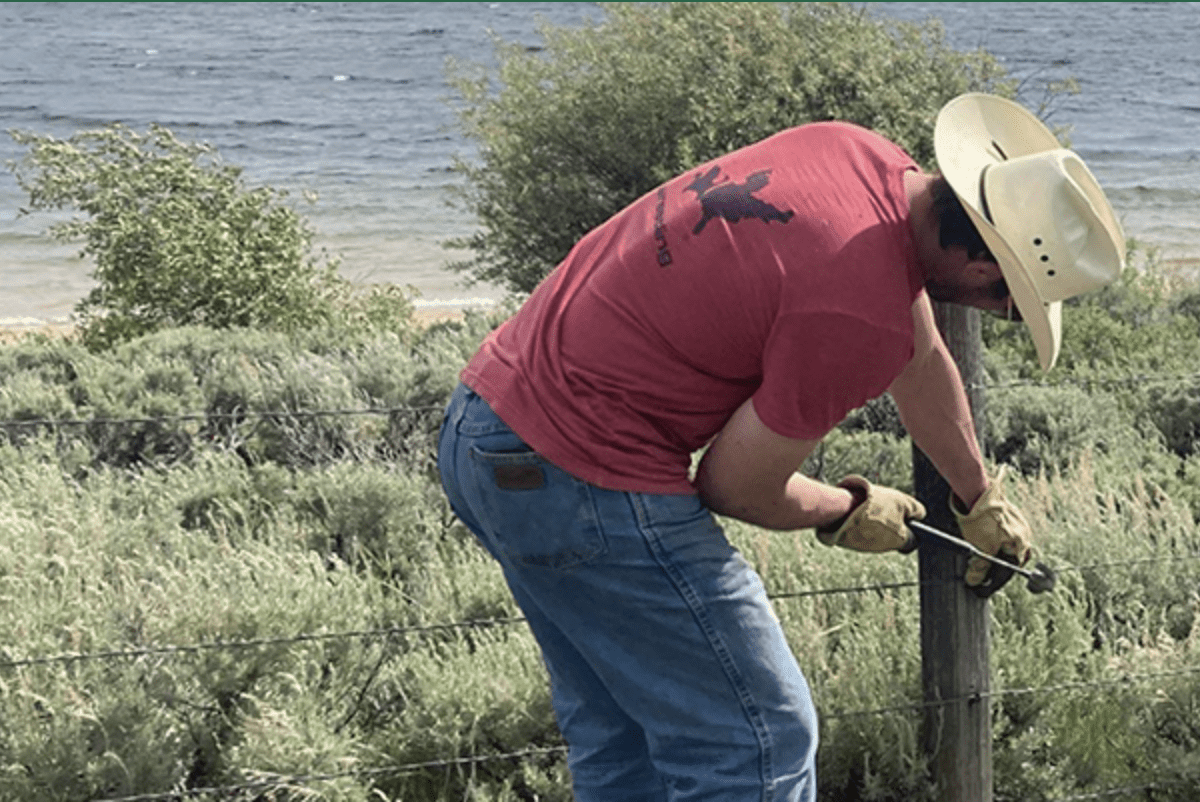
Making fencing wildlife friendly benefits migrating big game and reduces fence maintenance costs for ranchers. Photo: Vickrey Family
WLFW offers technical and financial assistance for landowners interested in adopting conservation practices.
Landowners who continue to manage their ranches using NRCS-prescribed conservation practices are ensured regulatory compliance under the Endangered Species Act for up to 30 years. These contractual assurances give producers the predictability they need to operate farms and ranches in the future.

The Vickrey Family is making their land friedlier for migrating wildlife through the Migratory Big Game Initiative. Photo courtesy of the Vickrey Family.
Meet North America’s Big Game Animals
From pronghorn and elk to moose and bighorn sheep, Western rangelands support some amazing wildlife that need wide-open spaces to roam. Learn more about these species below.
Elk
Mule Deer
Pronghorn
Moose
Bighorn Sheep
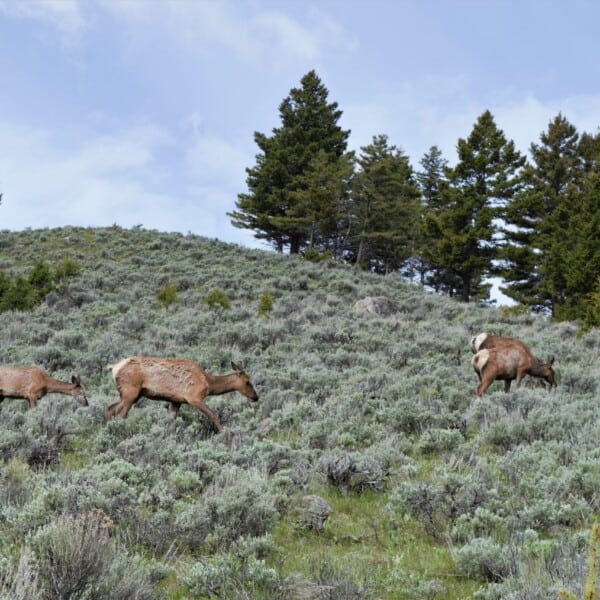
Photo: Brianna Randall
Elk
Did you know that elk and sage grouse share 40 million acres of sagebrush habitat? Sagebrush country serves as both winter range and spring calving grounds for elk. These ungulates migrate as far as 90 miles twice each year.
When grasses dry out in late summer, elk find protein in the buds of sagebrush. In the harshest part of winter, sagebrush poking through the snow becomes a life-saver food source. Plus, sagebrush's dark branches warm in the sun, melting the snow below to expose grasses. The branches also create air pockets in the snow, too, making it easier for elk to paw through drifts to find food.
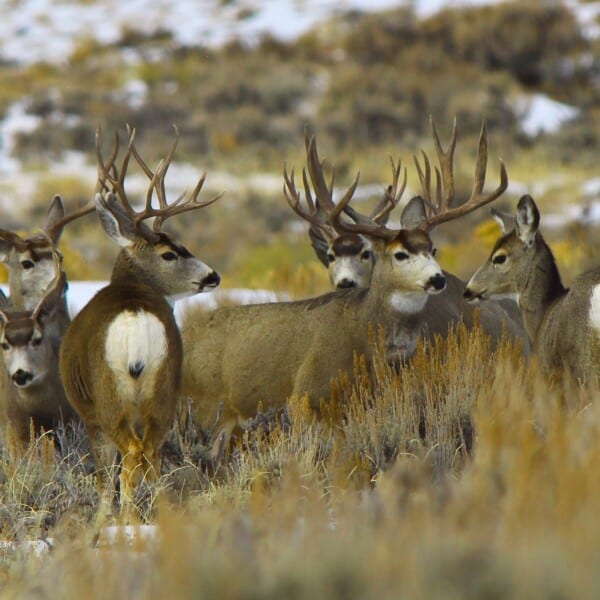
Photo: Susan Morse
Mule Deer
Mule deer also eat sagebrush in the winter. That’s why you’ll often see them sharing space with sage grouse out on the range. They come down from mountains in fall to converge in lower elevation valleys. Then in the spring, they head back up into the mountains as grasses and flowers green up at higher elevations.
In Wyoming, conservation efforts have protected vital pathways where mule deer and sage grouse habitat overlap.
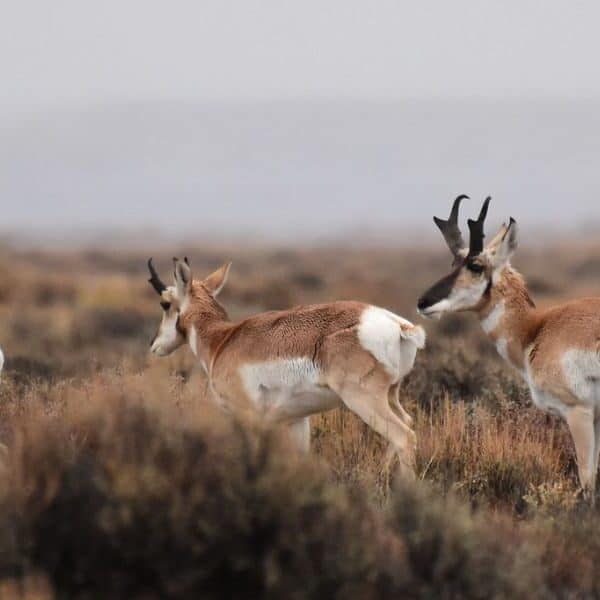
Photo: Tom Koerner, USFWS
Pronghorn
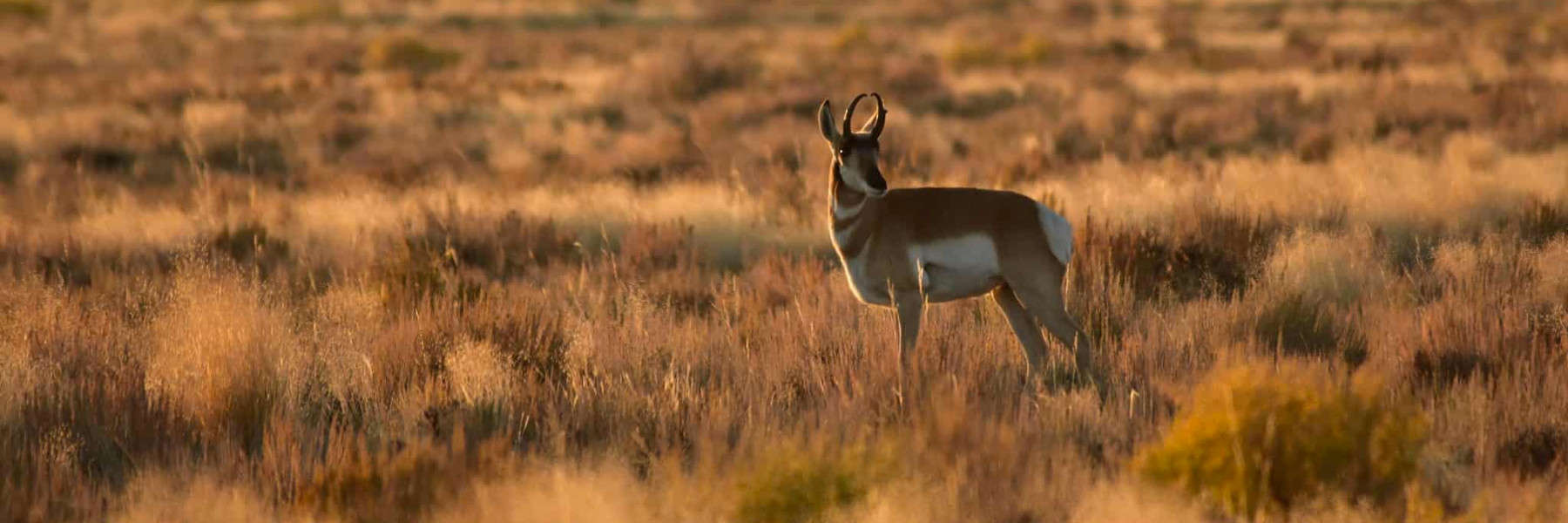
Fast, sleek and powerfully muscled, the pronghorn (also called antelope) relies on intact corridors. These mammals migrate as much as 150 miles between winter and summer range. To survive harsh winters, they nibble sagebrush leaves poking up from the snow. Pronghorn can reach speeds of up to 60 mph as they race across wide-open sagebrush and grasslands. Found only in North America, the pronghorn is the second-fastest land animal in the world – only the cheetah can sprint faster.

Photo: Greg M. Peters
Moose
Moose are the largest and heaviest members of the deer family living in North America today. These massive mammals are generally solitary creatures. They eat both terrestrial and aquatic vegetation, and frequent wet habitats, like streams, ponds, or wetlands. Moose can reach heights of seven feet (at their shoulder!) and can weigh more than 2,000 pounds.
In the West, moose live mainly in the Northern Rockies.

Photo: NPS/Diane Renkin
Bighorn Sheep
Renowned for their ability to climb steep cliffs, bighorn sheep live throughout the Rocky Mountains. Soft, flexible hooves aid their mountain-climbing prowess. These agile creatures congregate in large herds. Both males and females grow horns, though females’ horns are smaller and have less curvature.
Scientists recognize three subspecies of bighorn sheep: Rocky Mountain, Desert, and Sierra Nevada. Bighorn sheep are often considered good indicators of ecosystem health due to their sensitivity to environmental pressures.

“Through a habitat lease, ranchers can make a reasonable livelihood while also keeping habitat healthy and whole.”
Lesli Allison, Executive Director of Western Landowners Alliance
-
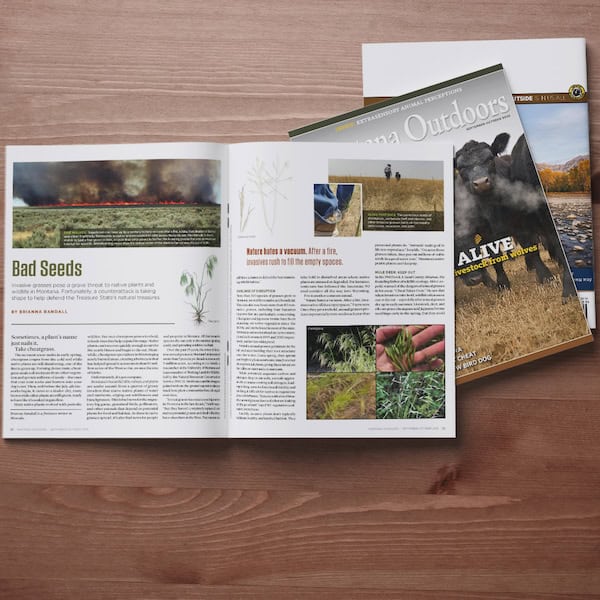
Bad Seeds: Invasive Annual Grasses Threaten Rangeland In Montana
A feature published in Montana Outdoors shows how partners are defending native plants in the Treasure State from invading grasses.