Photo: NRCS
Restoring Summer Range
In the summer, migratory big game rely on high-elevation forests and associated habitats to meet critical nutrition demands.
Within the West’s forested systems, decades of fire suppression have led to overly dense, closed-canopy stands that provide limited understory habitat for big game and are increasingly vulnerable to catastrophic wildfire.
WLFW’s approach for tackling this threat emphasizes proactive management that help shift forests back toward their natural, fire-adapted structures.
Specific strategies include:
- Maintaining and restoring healthy aspen stands, which function as natural fuel breaks and a garden for big game
- Thinning dense conifer stands to reduce competition, increase moisture availability, and understory forage production
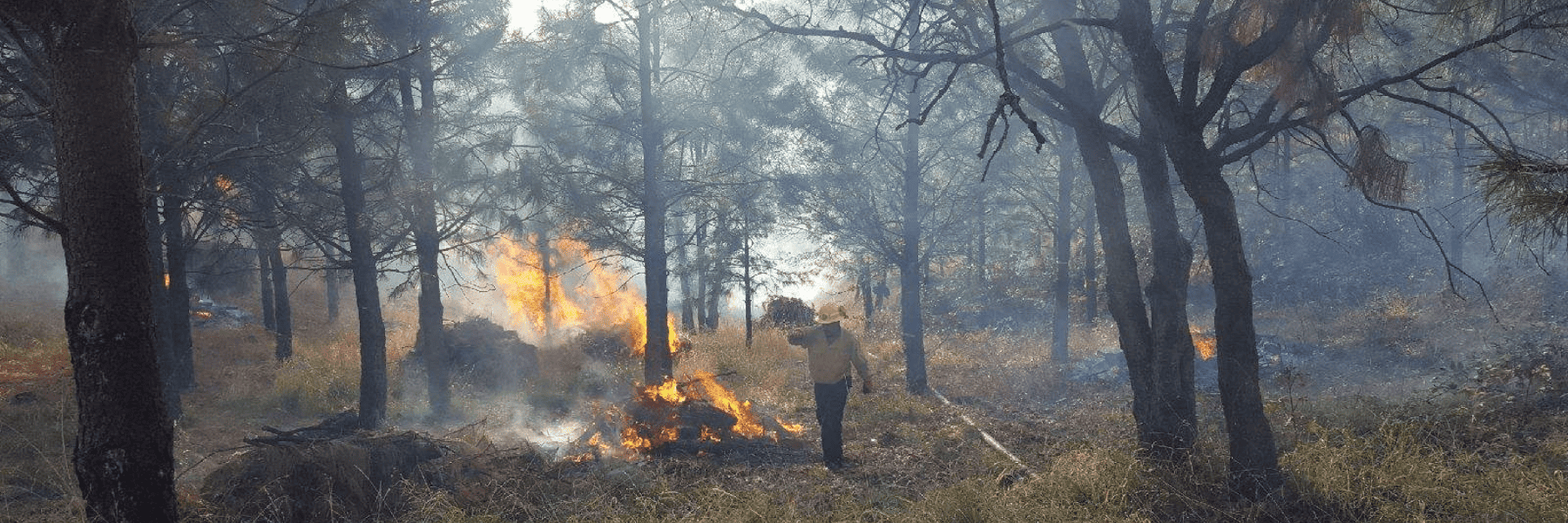
- Using prescribed fire to open dense stands, recycle nutrients, and mimic historic fire regimes
- Strategically clearing conifer forests when necessary
Watch an example of forest management from Rocky Mountain Elk Foundation describing how prescribed burning can improve forest health, providing habitat for big game and reducing the threat of catastrophic wildfire.
These maps provide annual percent cover estimates from 1984 to present of: annual forbs and grasses, perennial forbs and grasses, shrubs, trees, and bare ground. The data can be used to assess biotic conditions to inform management actions and monitor vegetation through time. Annual forb and grass maps provide a useful surrogate for exotic annuals, allowing managers to understand fluctuations through time and track management outcomes. Perennial forb and grass maps can help managers determine if restoration seeding is needed following disturbance or annual grass control.

-
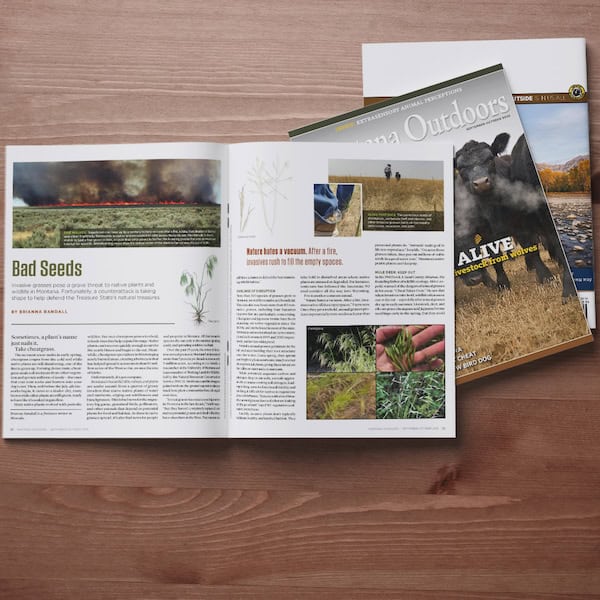
Bad Seeds: Invasive Annual Grasses Threaten Rangeland In Montana
A feature published in Montana Outdoors shows how partners are defending native plants in the Treasure State from invading grasses.